explore, taste, love it
explore, taste, love it
partner


hello Gubbio
hello Gubbio is a friendly greeting, an invitation to be enchanted, to get lost among stone alleys and breathtaking views, to breathe in the thousand-year history that intertwines with the slow rhythm of everyday life.
It’s our way of saying “welcome” to those who arrive with curious eyes and a strong desire to explore.
Because Gubbio is art, culture, nature, and ancient traditions, but it’s also the aroma of authentic cuisine and the deep taste of wines rooted in time, among vineyards and hills that tell stories.
With this guide, we want to take you on a journey to discover the city and its most evocative places.
Whether you’re here for a day or a week, hello Gubbio will be your travel companion.
points of interest
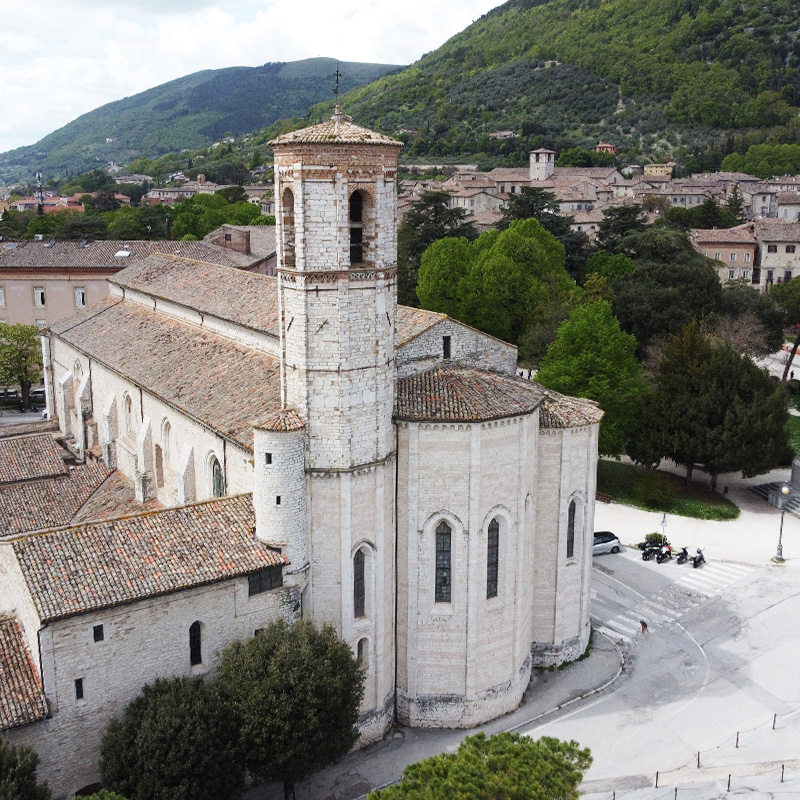
The Church of Franciscan Memory
Overlooking Piazza Quaranta Martiri, the Church of San Francesco stands on land once owned by the Spadalonga family, who welcomed the saint after he renounced his father’s wealth. It was here, in 1206–07, that Francis received his first habit, marking the origin of the iconic Franciscan robe. To commemorate this bond, Gubbio built a large convent complex in 1255.
The church’s Gothic architecture features an unfinished façade with an elegant portal and a rose window, while the three polygonal apses at the rear stand out for their slender single-lancet windows. Inside, the three naves are supported by 14 octagonal columns, and the ribbed vaults—added in the 18th century—give the structure a soaring sense of space.
Although many frescoes have been lost, the apses still preserve extraordinary works: the Stories from the Life of the Virgin by Ottaviano Nelli (15th century), Christ Enthroned with Saints (13th century), and scenes from the life of Saint Francis.
A place that speaks to Gubbio’s Franciscan soul—where art, history, and spirituality meet.
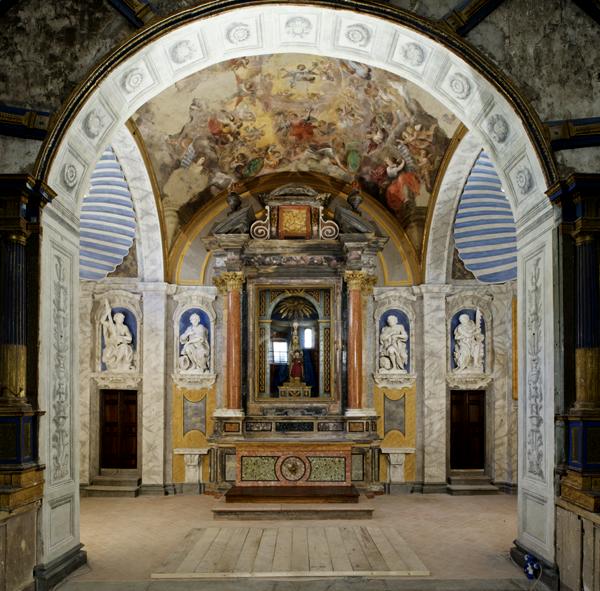
The Church of the Bianchi: Art and History in the Heart of Gubbio
Santa Maria dei Laici, also known as the “Church of the Bianchi,” is located in the center of Gubbio and is part of a monumental complex established in the 14th century by the Confraternity of the Laity. Originally, the complex also included a hospital, which was later merged with other facilities in the city during the 16th century.
Renovated in 2010, the church features a two-level layout, with a frescoed crypt and a single-nave worship hall. It underwent significant changes during the Baroque period, with architectural and decorative additions.
Among the standout artworks are a cycle of paintings by Felice Damiani, a 14th-century wooden Madonna, and an Annunciation by Federico Barocci, completed by one of his pupils.
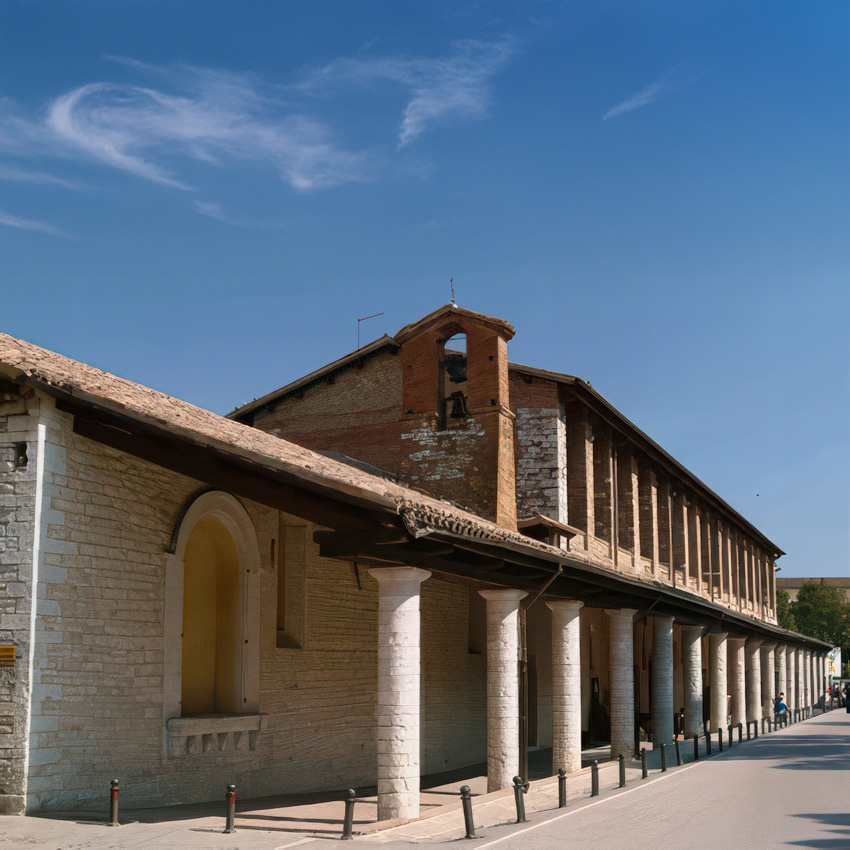
An Example of Pre-Industrial Architecture
Overlooking Piazza Quaranta Martiri, the long porticoed building next to the Church of Santa Maria dei Laici was originally built in 1326 as the seat of the Hospital of Santa Maria, established by the confraternity of the same name. In 1505, following the unification of other city hospitals, it became known as the Spedal Grande and remained in operation until 1628.
On the façade, a fresco from 1473 is still visible, depicting the Madonna between Saints Peter and Paul, painted by a pupil of Nelli.
As early as the 15th century, the Wool Guild wished to build a covered space above the hospital to tirare the cloth—that is, to dry and shape fabrics. After long disputes, the tiratoio was finally completed in the early 17th century.
Today, the recently restored hall hosts exhibitions and cultural events.
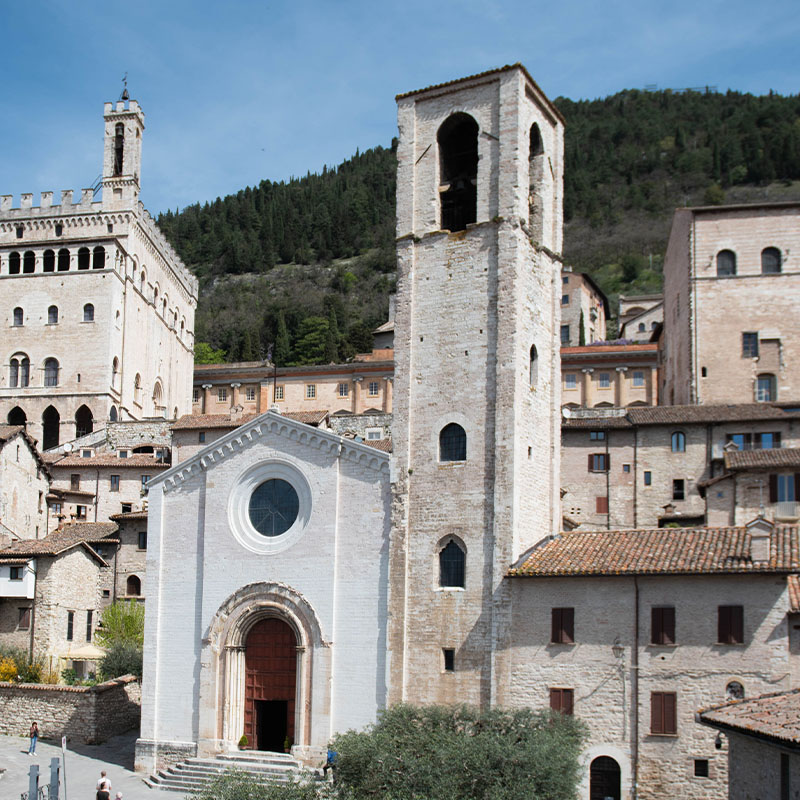
A harmony of Romanesque and Gothic
In the heart of Gubbio, the Church of San Giovanni—built between the 13th and 14th centuries—blends Gothic and Romanesque elements: the slender façade contrasts with the bell tower’s clean, austere lines.
The interior is simple and harmonious, featuring a single nave with a square apse, stone arches, and paired columns topped with floral capitals. Only a few fragments remain of the original fresco cycle.
The church became well known thanks to the TV series Don Matteo, in which it served for years as the parish of the main character. To this day, it remains an iconic destination for fans and visitors to the city alike.
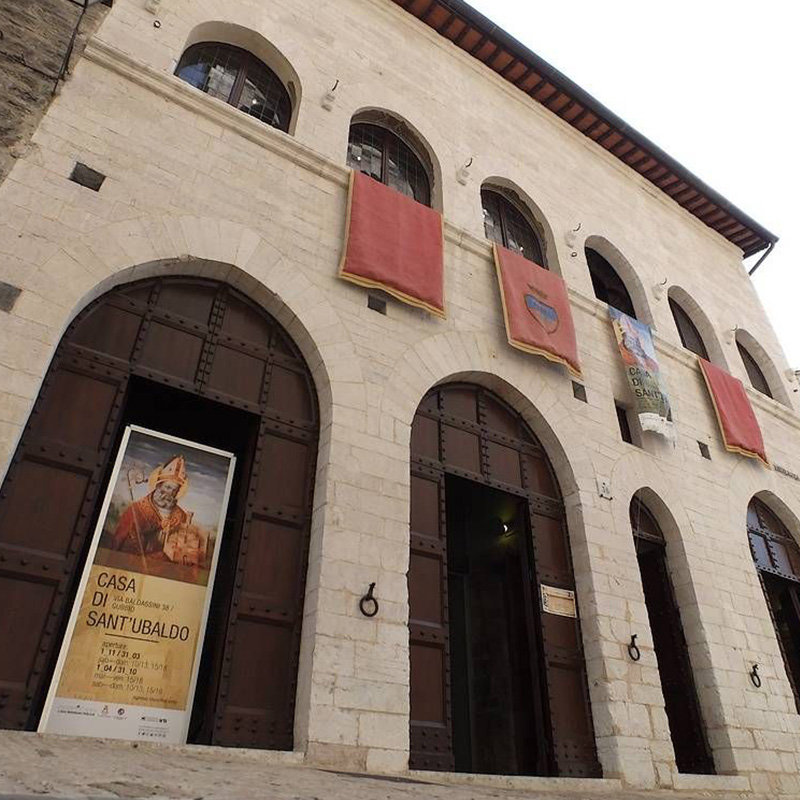
The home of Gubbio’s Patron Saint
According to tradition, the 14th-century building on Via Baldassini was once the home of Saint Ubaldo. Now owned by the University of Perugia and managed by the Perugia Foundation, it preserves original wall decorations and hosts spaces for conferences, work, and exhibitions.
On the upper floor is a gallery featuring over thirty works dedicated to Gubbio’s Patron Saint, created between the 16th and 19th centuries, along with a valuable collection of paintings and majolica from the 17th to the 20th century.
Today, the Casa is a cultural and museum center, a point of reference for the Eugubine community.
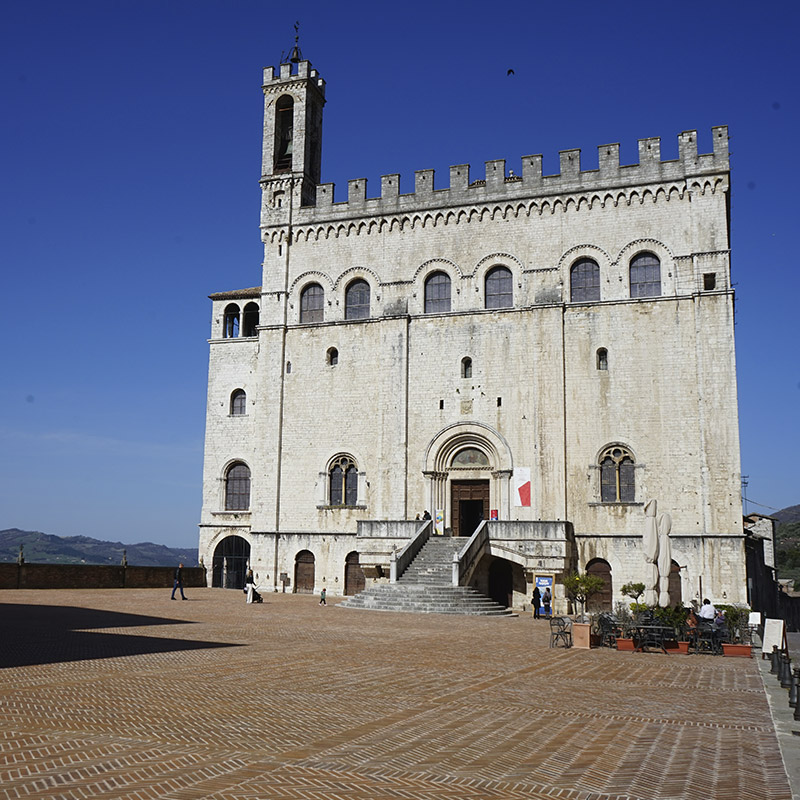
Il simbolo di Gubbio
Il Palazzo dei Consoli, imponente simbolo di Gubbio, svetta con la sua elegante struttura gotica del XIV secolo nel cuore della città. Costruito a partire dal 1332 come espressione del potere comunale, fu progettato da Angelo da Orvieto e completato con il contributo di Matteo di Giovannello, detto Gattapone. La sua posizione centrale, affiancata dalla realizzazione dell’ardita Piazza Grande, riflette l’ideale medievale di unità civica. Al suo interno si svolgeva la vita politica del libero comune, con la Sala dell’Arengo, gli uffici del Capitano del Popolo e le residenze dei magistrati. Il palazzo, sorprendentemente moderno per l’epoca, era dotato di cappella, servizi igienici e un acquedotto interno. Ancora oggi affascina per la sua maestosità e per la storia che custodisce tra le sue mura.
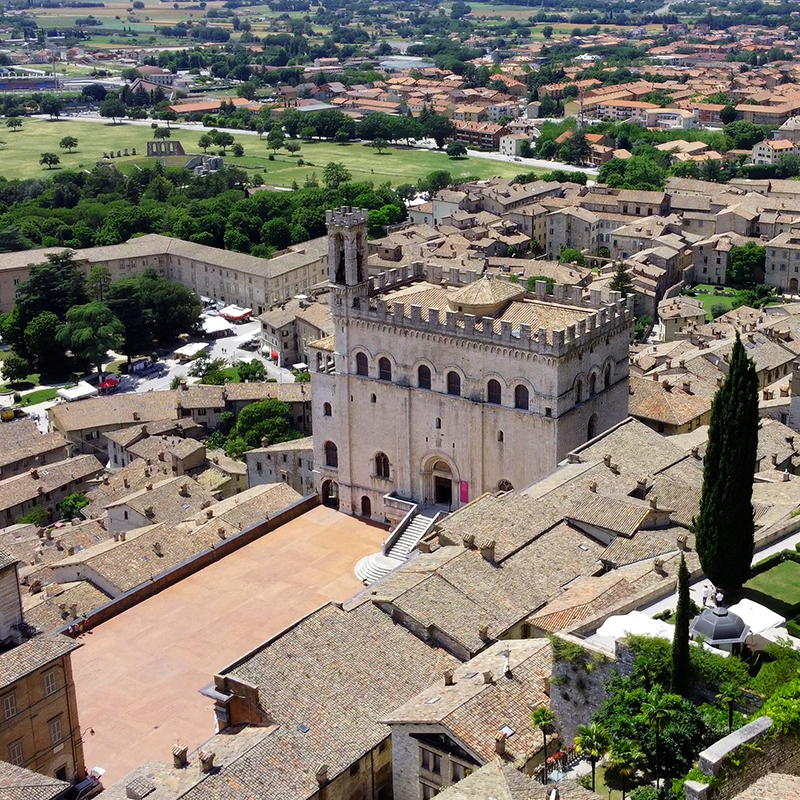
The Largest Hanging Square in Europe
This one-of-a-kind square, set halfway up the hillside and supported by majestic medieval arches, seems to float above the city’s red rooftops, offering the sensation of standing on a natural terrace overlooking Umbria.
The true beating heart of Gubbio, Piazza Grande is one of the finest examples of medieval urban planning and among the largest hanging squares ever built. The ambitious project was approved in 1321, but the work was not completed until 1482.
The vast square symbolically embraces the city’s districts—Sant’Andrea, San Giuliano, San Martino, and San Pietro—perfectly fulfilling the purpose for which it was conceived. Every corner speaks of history, community, and tradition, reaching its peak during the spectacular and unique Festa dei Ceri.
At sunset, when the golden light brushes the pale stone, Piazza Grande becomes an enchanting and unmatched natural stage—the perfect moment to take a photo, share an aperitivo, or simply be mesmerized by its timeless beauty.
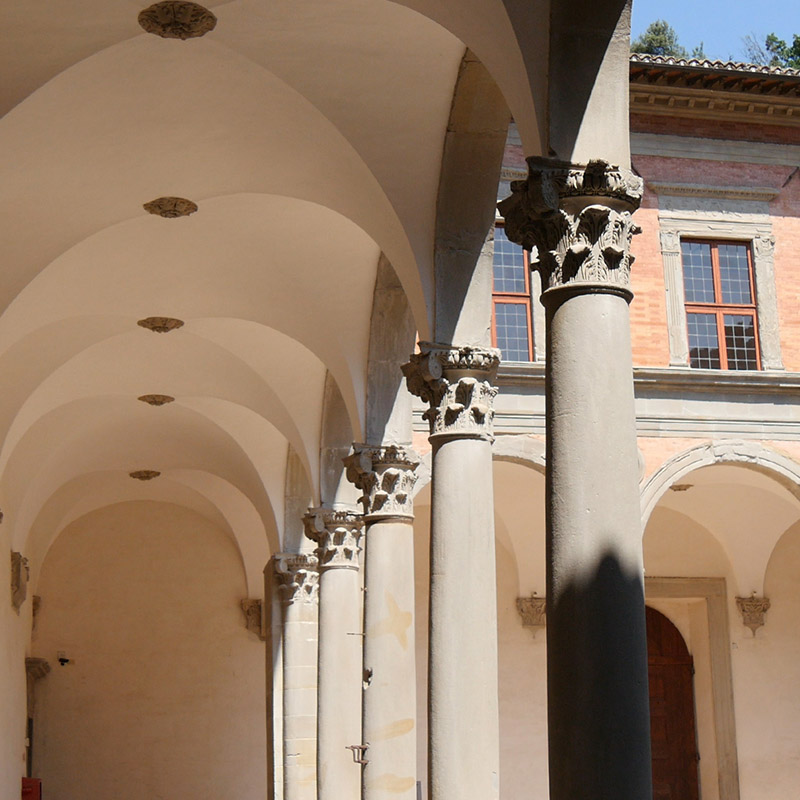
The palace of Duke Federico
Facing the Cathedral stands a refined Renaissance palace commissioned by Federico da Montefeltro and built from 1476, based on a design by Francesco di Giorgio Martini. The structure incorporates pre-existing medieval elements, still visible on the downhill side, and is arranged around an elegant inner courtyard.
The ground floor features arcades and slender columns, while the upper level is marked by architraved windows and pilasters. The palace also includes a charming hanging garden overlooking the Palazzo dei Consoli, connected to the main building by a vaulted passageway, above which lies a hall with a votive fresco by Orlando Merlini.
Today, visitors can explore some of the historic rooms, the underground spaces with archaeological finds, a replica of Federico da Montefeltro’s famous studiolo, and various temporary exhibitions.
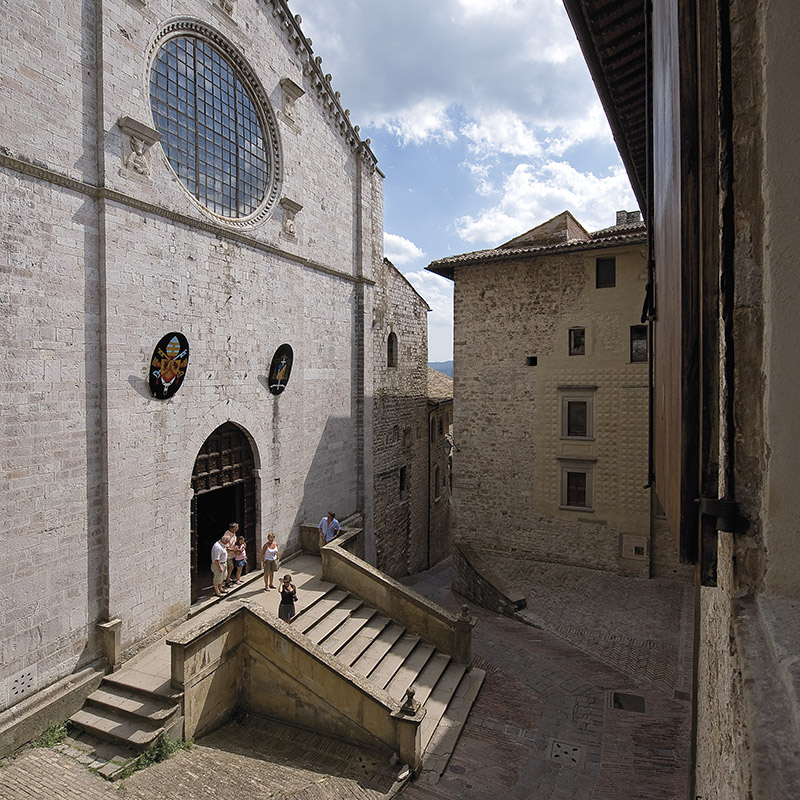
Cathedral and Diocesan Museum: spiritual heart and treasure of sacred Art
Gubbio’s Cathedral, dedicated to Saints Mariano and Giacomo, rises in the upper part of the city with its majestic 12th-century Gothic architecture. The austere façade, large rose window, and simple interiors create a solemn atmosphere, enriched by precious Renaissance artworks and wooden sculptures.
Just a few steps away is the Diocesan Museum, which preserves centuries of Eugubine spiritual history through an extraordinary collection of sacred art: chalices, reliquaries, mitres, liturgical vestments, and exquisite gold and silver objects, displayed in the evocative Treasure Rooms.
Together, the Cathedral and Museum offer a profound journey into the region’s religious and artistic heritage—a living testament to the Church’s influence on medieval and Renaissance culture in Umbria.
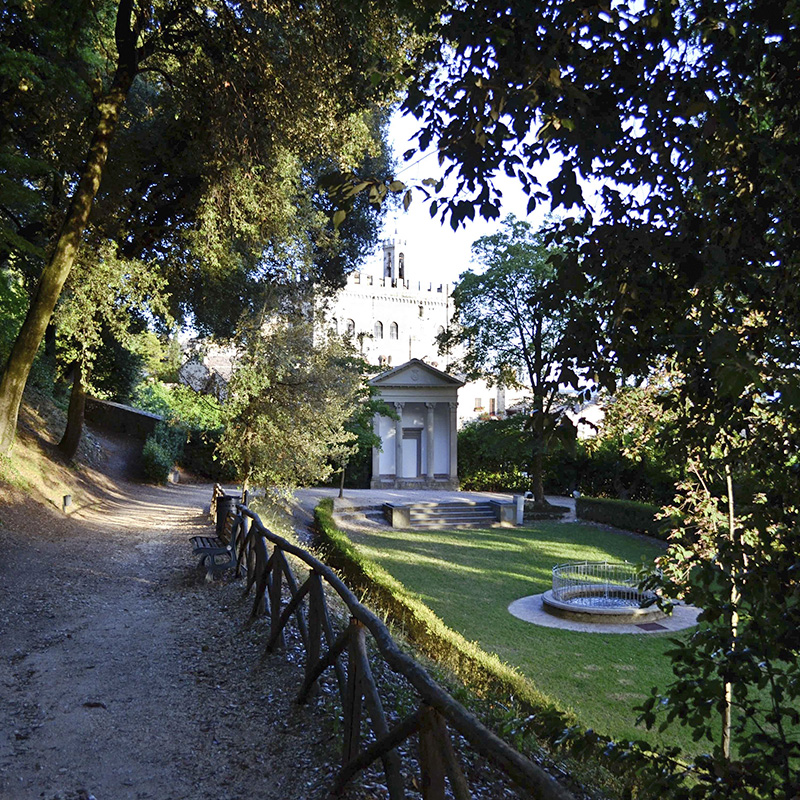
An english-style park in the heart of Gubbio
Il Parco Ranghiasci è un affascinante giardino ottocentesco incastonato tra il centro storico di Gubbio e le pendici del Monte Ingino. Voluto dal marchese Francesco Ranghiasci e ispirato ai modelli dei parchi inglesi, venne realizzato tra il 1831 e il 1849 con l’intento di creare un raffinato paesaggio romantico, ricco di scorci panoramici, viali alberati, edifici neoclassici e suggestive rovine medievali. Il progetto fu influenzato anche dalla moglie inglese del marchese, Matilde Hobhouse. Il parco ospita una ricca varietà di alberi, tra cui lecci, tigli, ippocastani e aceri, e conserva elementi unici come il tempietto, la torre medievale e il villino padronale. Oggi rappresenta un prezioso polmone verde cittadino e un raro esempio di parco paesaggistico storico nel cuore dell’Umbria.
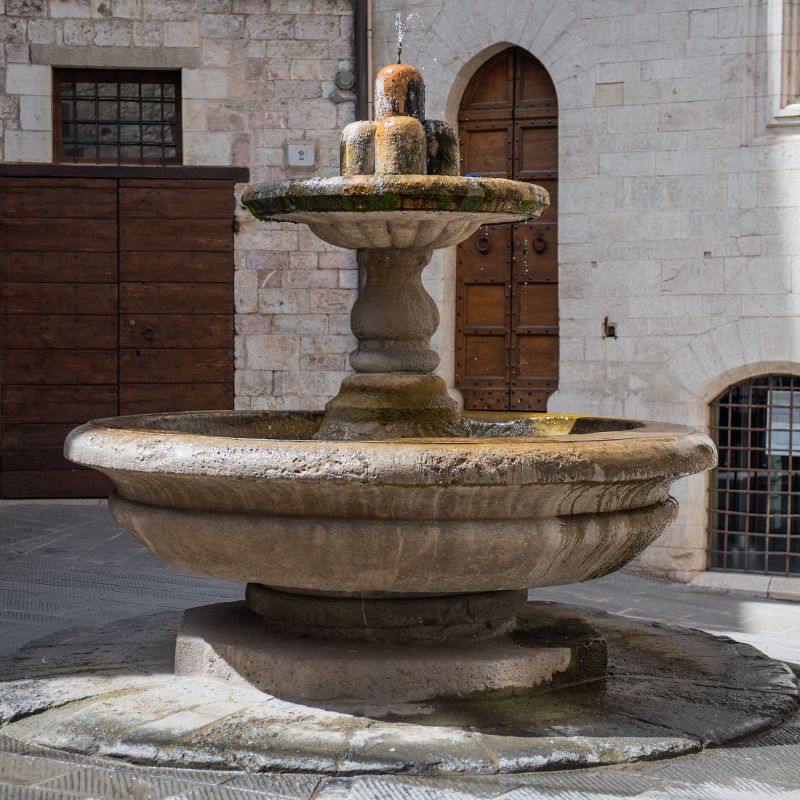
Becoming a “Matto di Gubbio”
In the heart of Gubbio, the Palazzo del Bargello is a refined 14th-century Gothic building that houses the Permanent Crossbow Exhibition, dedicated to the famous Palio della Balestra, which each year brings medieval flair and festivity to the city.
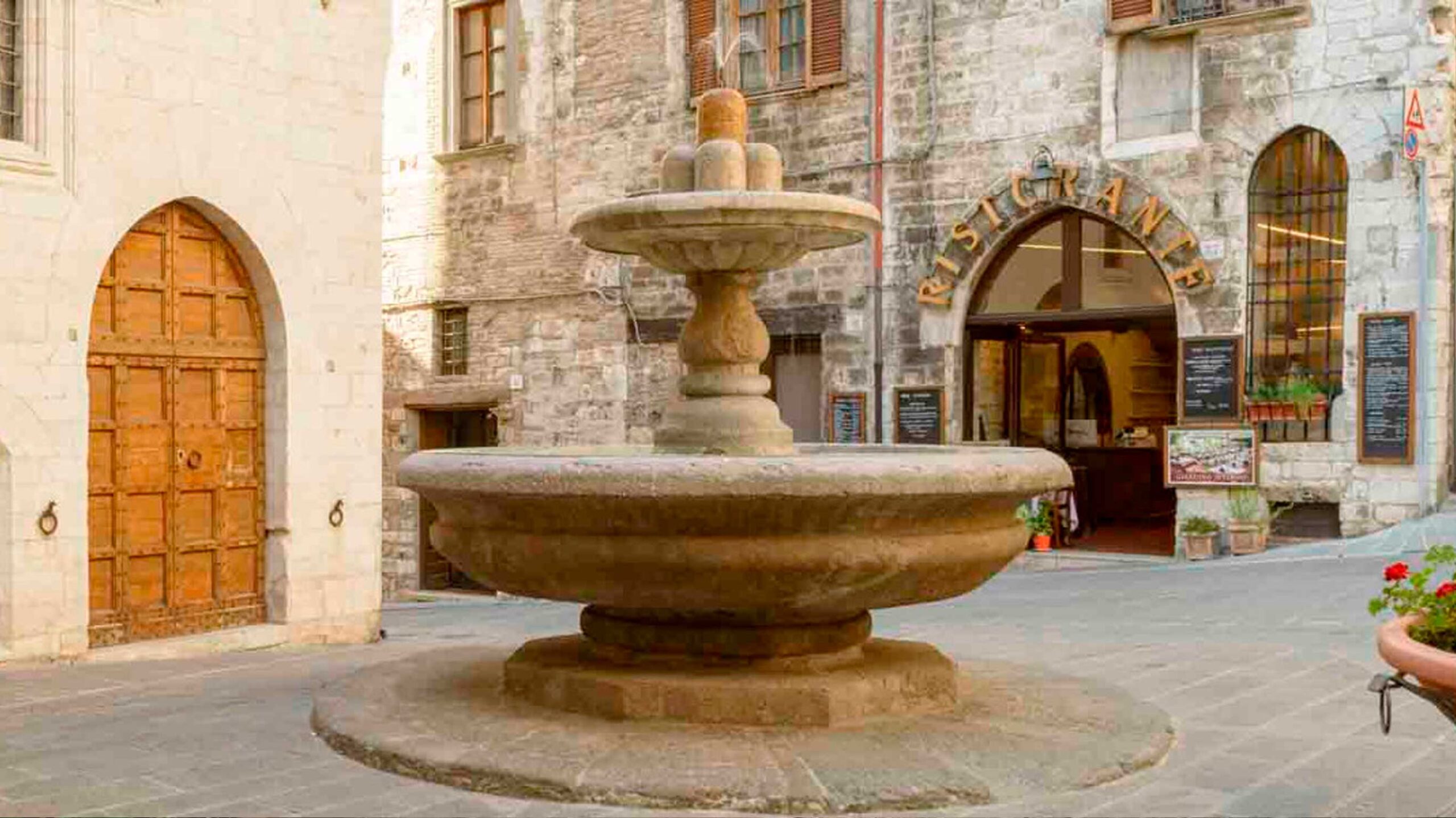
In front of the palace stands the Fontana dei Matti—the “Fountain of the Mad”—at the center of a beloved local tradition: anyone who runs three laps around it, under the watchful eye of a true Eugubine, earns the honorary title of matto (madman) and may even receive an official “madman’s license.”
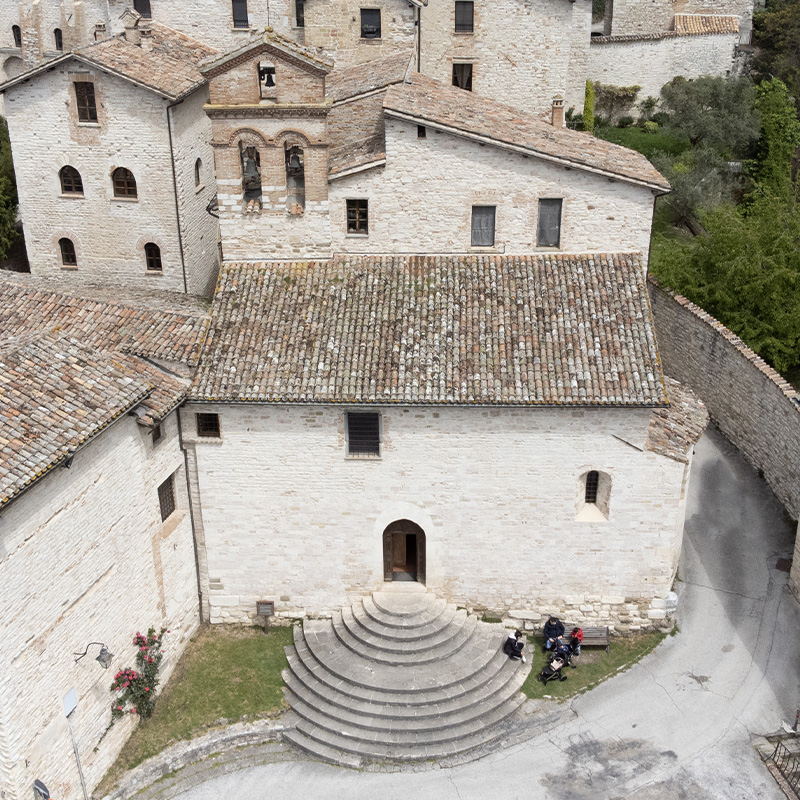
The beauty of Romanesque style and the Don Matteo set
The Church of San Marziale is a small, ancient Romanesque chapel located on the edge of Gubbio’s historic center, near Porta Vehia. Dating back to the 12th century, it was annexed to the nearby monastery in 1533.
The building is simple and unadorned, with two naves divided by columns, and houses a fine painting by Benedetto Nucci.
It became known to a wider audience thanks to the TV series Don Matteo, serving as the interior filming location for the Church of San Giovanni.
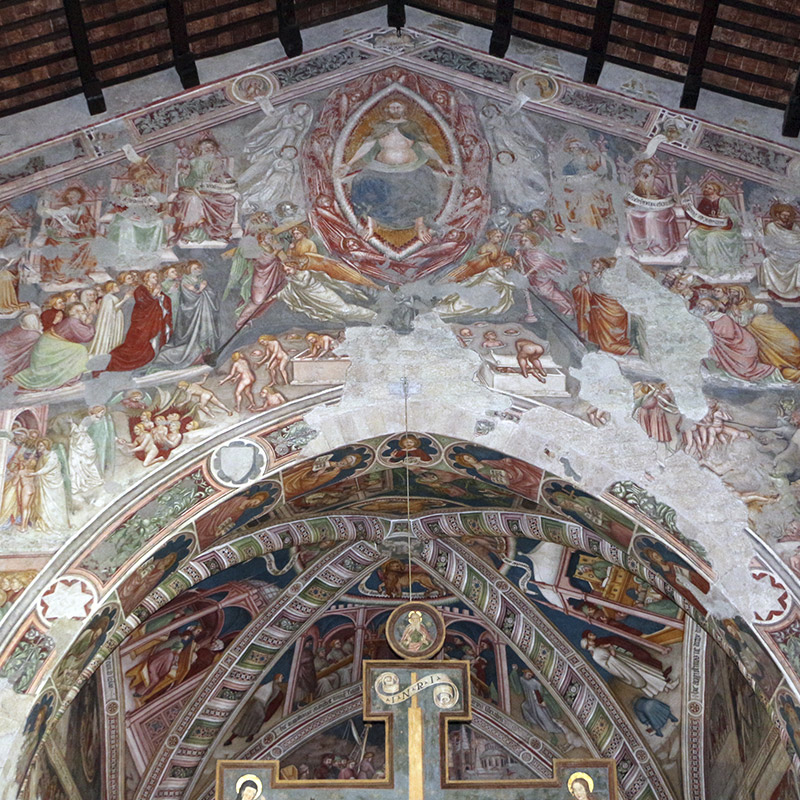
A must-see for sacred art lovers
Built between 1251 and 1294 next to the still-standing Augustinian convent, the Church of Sant’Agostino is a treasure chest of art and spirituality in the heart of Gubbio.
The interior, with a single nave and 16th-century arches, houses numerous works by local painters, including Ottaviano and Virgilio Nucci. Particularly notable are the late Gothic frescoes by Ottaviano Nelli depicting the Stories of Saint Augustine and the Last Judgment.
The church also preserves paintings by Felice Damiani, Michelini, Baldassini, and other Umbrian artists—making it an unmissable stop for anyone passionate about sacred art.
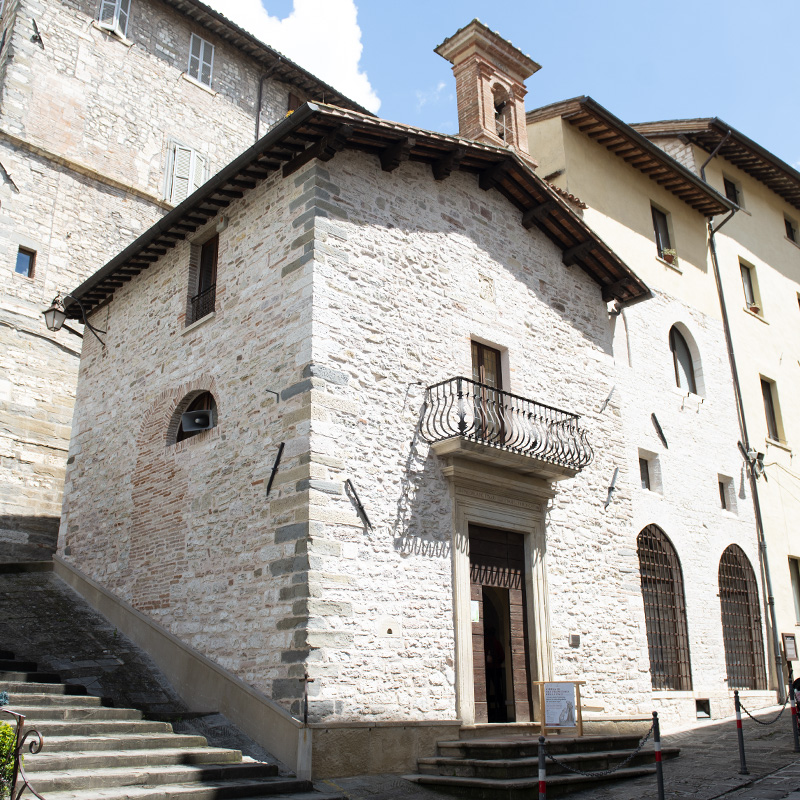
The church, the she-wolf’s tomb, and the Festa dei Ceri
The Church of San Francesco della Pace is closely tied to the Università dei Muratori Scalpellini e Arti Affini, the traditional guild of stonemasons and related trades, which preserves its legacy.
This small sacred site plays a central role in the Festa dei Ceri, for which the guild serves as guardian: inside the church, the Captains of the Festa are appointed, and the statuettes of Saints Ubaldo, George, and Anthony—later placed atop the Ceri—are kept.
The building stands above the cave where, according to tradition, the she-wolf tamed by Saint Francis once lived. The name della Pace (“of Peace”) was given in 1584, when a stone—now used as the altar—was moved here from the Church of the Vittorina. It is said that Saint Francis stood on this very stone while delivering a sermon after calming the animal.
In the crypt lies the stone that once covered the she-wolf’s tomb.
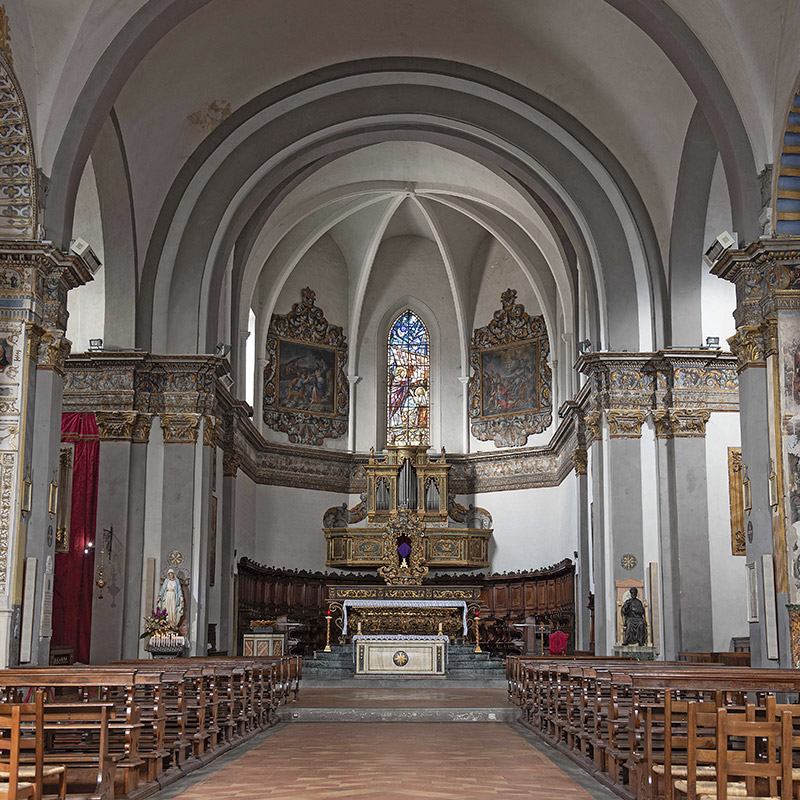
The oldest church in Gubbio
San Pietro is the oldest church in Gubbio and, even in the early medieval period, was one of the city’s main places of worship. Next to it stood a Benedictine abbey founded in the 11th century, later taken over in 1519 by the Olivetan Benedictines, who transformed the building in Renaissance style.
The façade reflects various eras: remnants of an early medieval portico, a 13th-century upper section, and 16th-century windows.
Inside, the single nave with seven arches houses important artworks, including the grand organ by V. Beltrami, the altar by Domenico Valli, and paintings by Tofanelli, Raffaellin del Colle, Brozzi, and Allegrini.
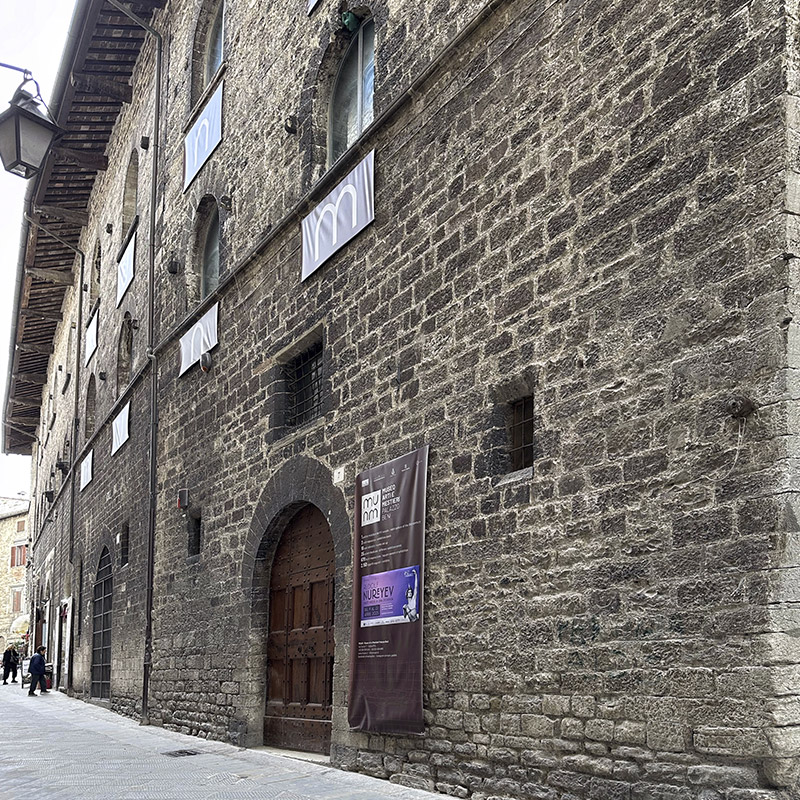
15th-century noble residence
Located in the charming San Martino district, this historic noble residence dates back to the 15th century. The palace was built by combining older buildings and belonged to the Beni family, who returned to Gubbio during that period after a long exile.
Pope Martin V stayed here in 1420, followed by Pope Julius II in 1506.
A true architectural gem, the palace was once adorned with fine frescoes by Ottaviano Nelli, some of which survive today: painted coats of arms in the small courtyard loggia and allegorical figures in a room on the first floor.
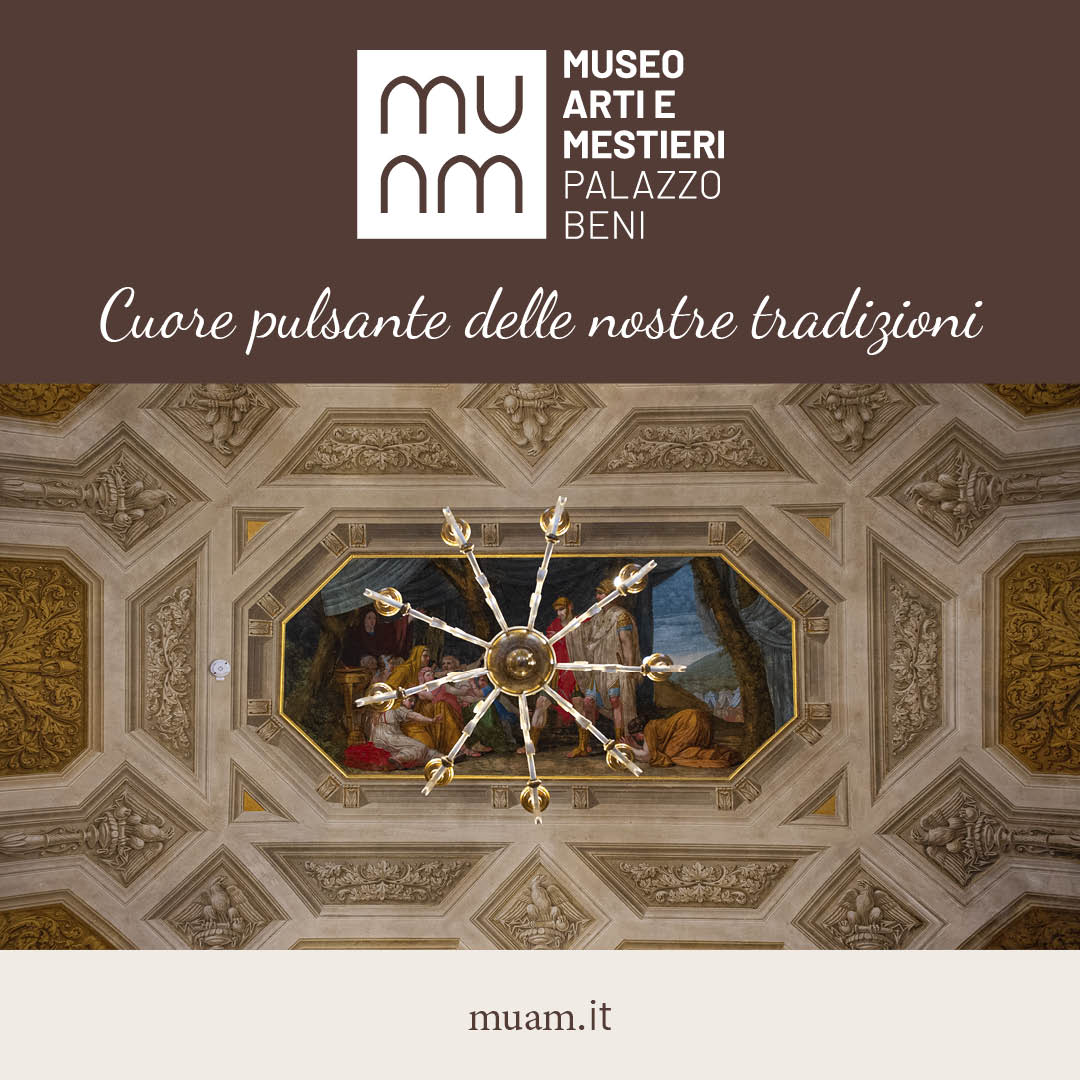
Visiting the palace—now home to the Museum of Arts and Crafts—is like stepping back in time.
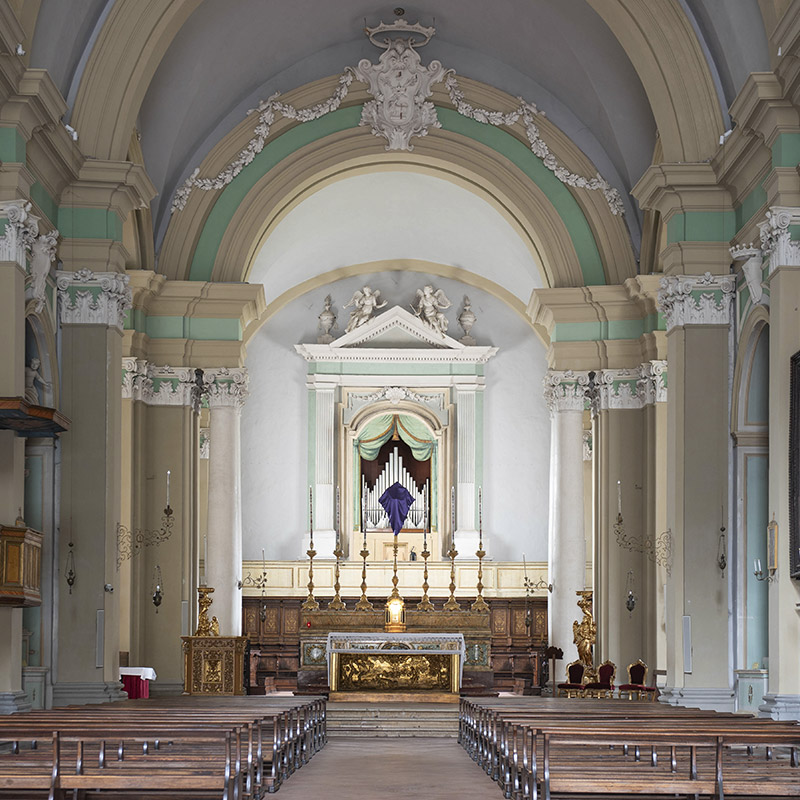
The heart of the Quartiere of San Martino
The Church of San Domenico, one of the oldest in Gubbio, stands at the beginning of Via dei Consoli and has been documented since the 11th century. Originally dedicated to Saint Martin, it was expanded by the Dominicans in the 14th century and underwent various modifications over the following centuries, including major transformations in the 18th century.
The interior, with a single nave and Latin cross layout, preserves significant works of art: 14th-century frescoes from the workshop of Ottaviano Nelli, 16th-century decorations in the Lombardi Chapel, and paintings by Felice Damiani, Giovanni Baglioni, and Raffaellin del Colle.
In the choir, the intricately carved wooden stalls and the large sculpted lectern stand out—masterpieces of woodworking attributed to Mariotto di Paolo Sensi.
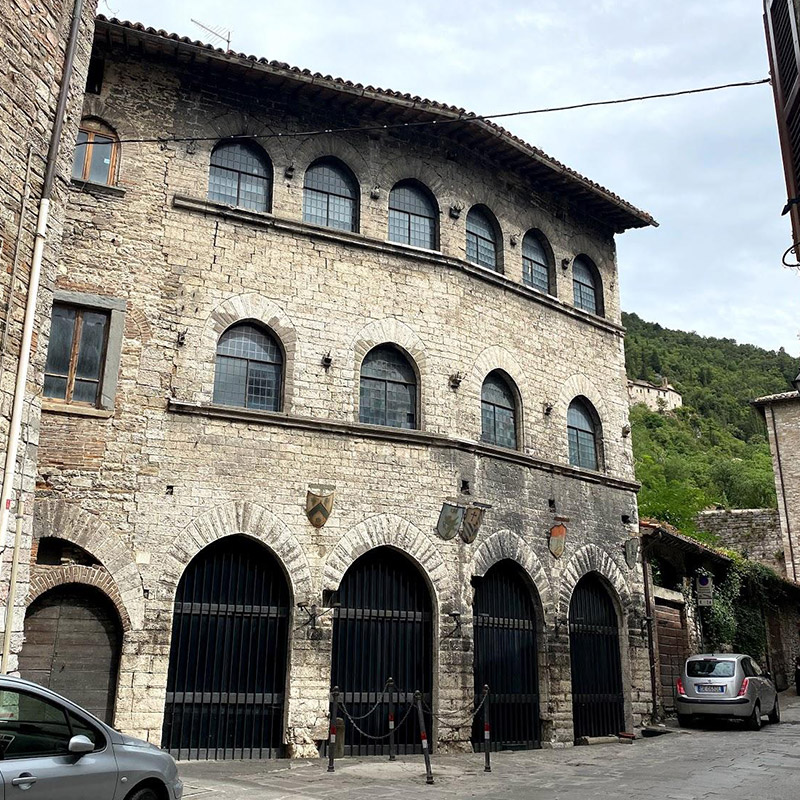
One of the city’s first public buildings
Palazzo Cante Gabrielli was built at the end of the 13th century by Cante de’ Gabrielli, Lord of Gubbio and Captain of the People. One of the city’s earliest public buildings, it served both as a private residence and a political seat.
After the fall of the communal government in 1384, the palace changed hands several times until it was purchased and restored in 1970 by Dante Minelli.
An example of Umbrian Gothic architecture, it features a grey stone façade with arches and ogival windows.
Today, it houses the Museum of Medieval Torture, and just in front of the building stands a circular stone—known as the pietrone or petrone—believed to be one of the Umbrian altars mentioned in the Eugubine Tables.
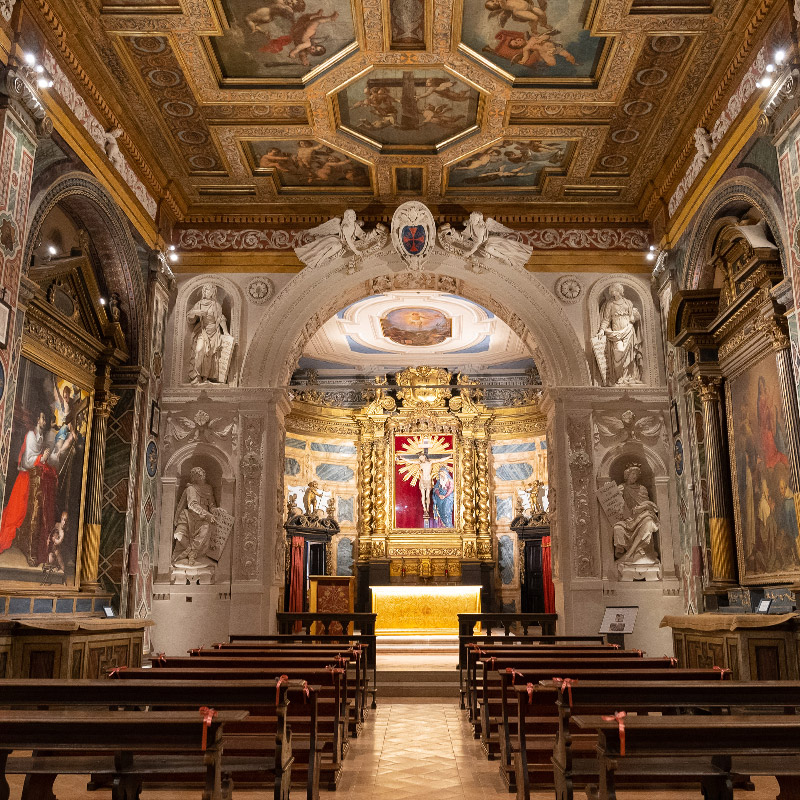
A small gem and home of the Confraternity of Santa Croce della Foce
The Church of Santa Croce della Foce is one of the oldest in Gubbio, built near the Roman walls along the ancient road that once connected the city to the Via Flaminia and major medieval spiritual sites.
Rebuilt in 1262, it has always been closely tied to the city’s religious life and is the seat of the Confraternity of Santa Croce della Foce.
After years of closure, the church reopened in 2021 following an important restoration.
Inside, it houses a striking 16th-century wooden Crucifix, traditionally believed to have been carved from a single fig tree trunk. Of extraordinary realism and expressive intensity, the work is likely from the workshop of the “Nero” of Castiglion Fiorentino.
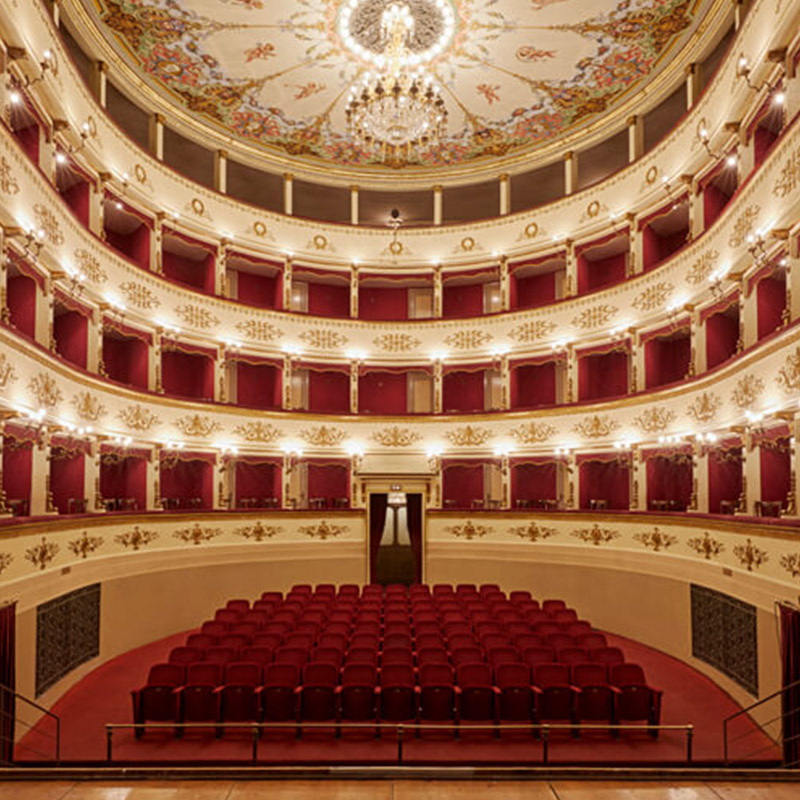
A small and precious 19th-century theater
Gubbio’s Teatro Comunale Luca Ronconi was established in 1713 at the initiative of a local academy of nobles and inaugurated in 1738. Over the centuries, it underwent several expansions and transformations.
Completely renovated between 1840 and 1862—with the contribution of prominent Eugubine and Italian artists—it now stands as a refined example of 19th-century theater architecture, adorned with stuccoes, frescoes, and a curtain depicting the Palazzo dei Consoli.
After a long restoration, it reopened in 1985 and, in 2015, was named in honor of the theater director Luca Ronconi.
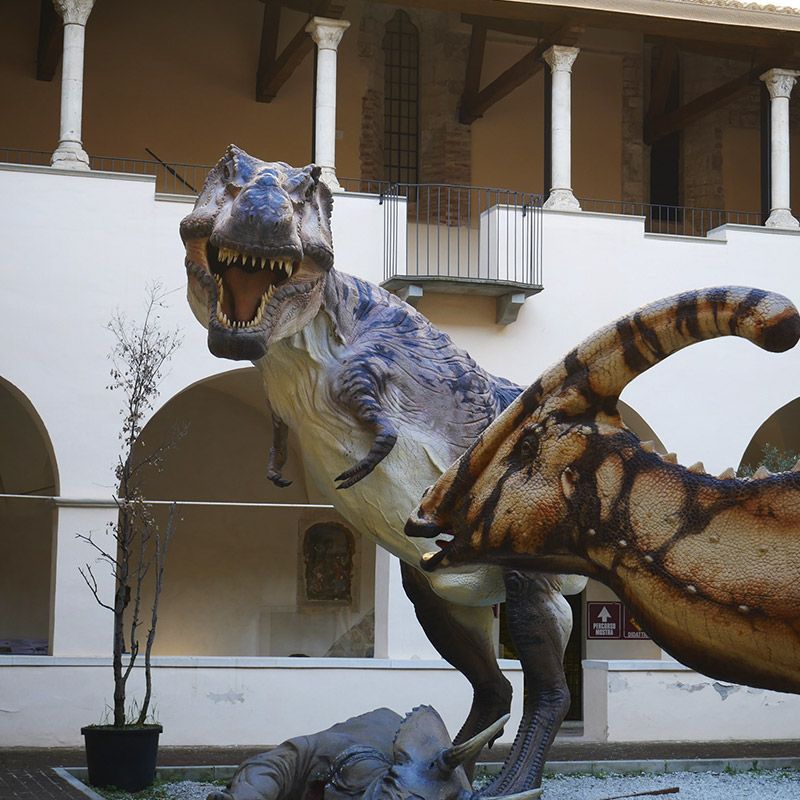
The history of life on earth
Through spectacular life-size models, fossils, casts, panels, and multimedia content—including Paco Lanciano’s Quadrisfera—the Extinction exhibition tells the story of life on Earth, focusing on the theme of major extinction events.
The exhibition ends with a section dedicated to the timeless fascination of dinosaurs and Ice Age mammals, celebrated as icons of collective imagination and true stars of pop culture.
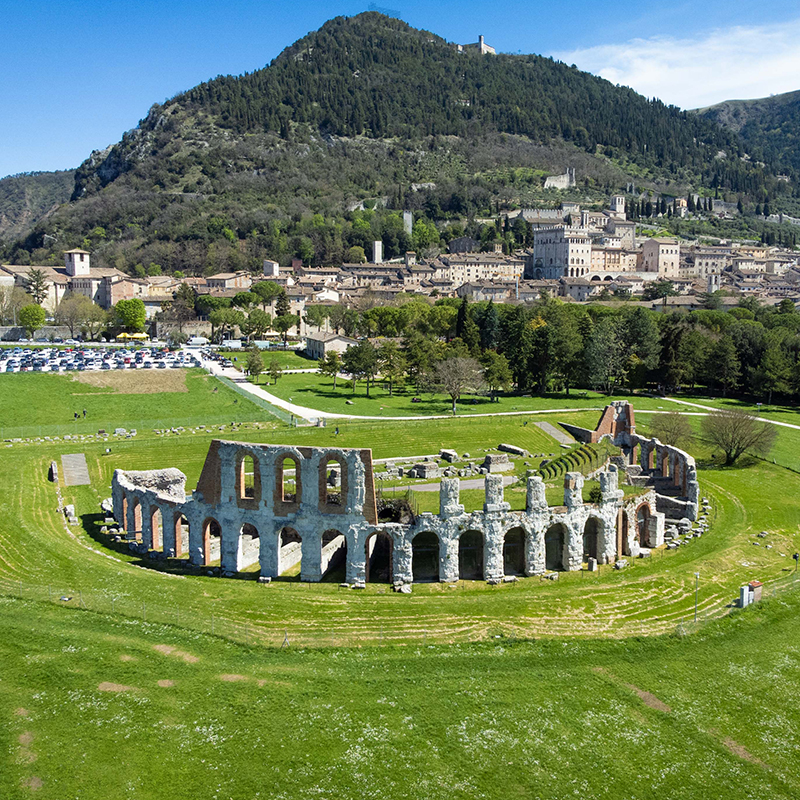
A testament to ancient Roman Ikuvium
The area surrounding Gubbio’s city walls preserves precious traces of its Roman past, when ancient Ikuvium flourished in the valley below.
Here, the remains of an extensive district with elegant homes and mosaics have been uncovered, revealing the city’s economic and cultural significance during Roman times.
The Roman Theatre, built at the end of the 1st century BCE and now restored, still plays an active role in city life, hosting performances and summer events.
Surrounded by a wide lawn and a playground, it’s the perfect spot to relax, take a walk, or enjoy the outdoors.
Next to the theatre, a rural farmhouse houses the Antiquarium, which displays archaeological finds—including the splendid Medusa mosaic discovered on site.
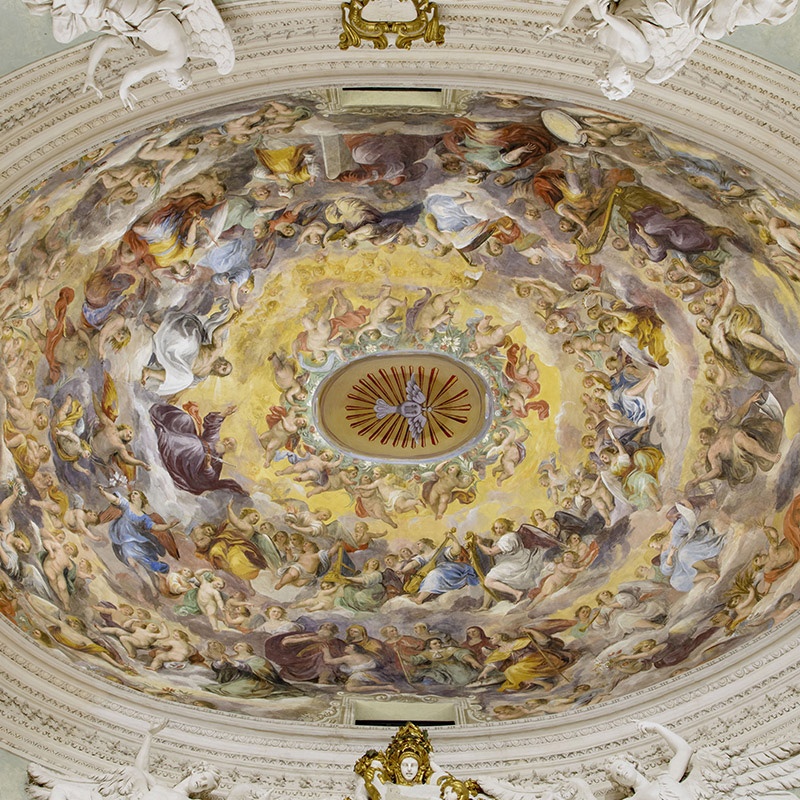
The miraculous image of the Madonna with Baby Jesus
Appena fuori dalle mura di Gubbio, lungo la strada per Perugia, sorgeva una piccola chiesa cara agli eugubini, che custodiva un’immagine sacra della Madonna con il Bambino, ritenuta miracolosa. I prodigi attribuiti alla Vergine spinsero il vescovo Alessandro Sperelli a promuovere la costruzione di un nuovo tempio, iniziata nel 1662 sul terreno delle Monache di Santo Spirito. Grazie all’intercessione del cardinale Carpegna, fu scelto un progetto ispirato alla celebre chiesa romana di San Carlino alle Quattro Fontane, firmato da Francesco Borromini. I lavori furono diretti da Carlo Perugini, con il supporto dello stesso Borromini da Roma. La nuova chiesa della Madonna del Prato presenta una facciata elegante in pietra locale, arricchita da elementi dorici e corinzi, statue dei beati Sperandio e Gennara, realizzate dagli scultori eugubini Palmerino Muccianti e Biagio Vantaggi.
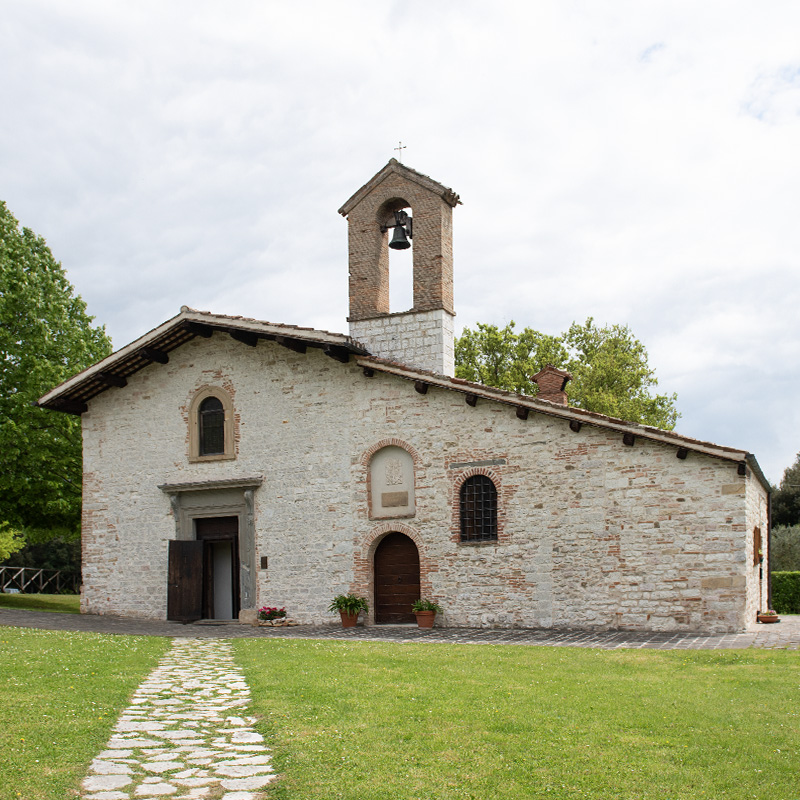
Here took place the encounter between Saint Francis and the Wolf
Embraced by the quiet countryside of Gubbio, the Church of Santa Maria della Vittorina stands as a symbol of faith and Franciscan memory.
Founded in the 13th century and donated to Saint Francis in 1213, it was the first refuge of the Friars Minor before their move into the city. Later entrusted to the Poor Clares, the church is forever linked to the famous legend of Saint Francis and the Wolf of Gubbio, commemorated by an engraving on its façade.
The stone building preserves both medieval and Renaissance elements, such as the 16th-century pietra serena stone portal. Inside, frescoes by Benedetto Nucci and ten scenes from the life of the saint, painted in 1639, tell a story where art, spirituality, and tradition are deeply intertwined.
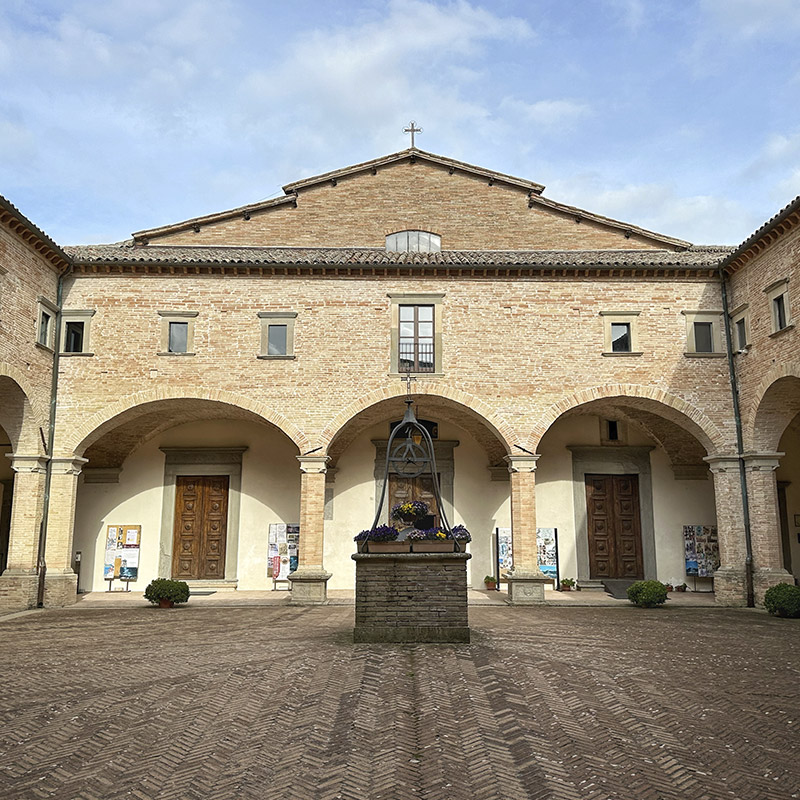
Home to the incorrupt body of the Patron Saint and the Ceri
At the top of steep Mount Ingino, towering above the city of Gubbio, stands the Basilica of Sant’Ubaldo—both the starting and final point of the city’s famed and emotional Festa dei Ceri. Every year, on May 15th, the entire Eugubine community comes together for a race of ancient origin, paying tribute to its patron saint, Ubaldo, whose incorrupt body rests inside the basilica in a bronze urn.
Behind the essential simplicity of its façade lies a surprisingly rich and captivating interior, divided into five naves that lead to a semicircular apse. The walls are adorned with frescoes from the 16th to 18th centuries, creating a deeply evocative atmosphere.
The current structure, built over earlier medieval foundations and recently restored, was expanded starting in the 16th century—the same period in which the adjoining convent and cloister were constructed.
From the cloister, visitors enter the church itself, enveloped in history, spirituality, and beauty—where the Ceri rest, awaiting their eternal return to life.
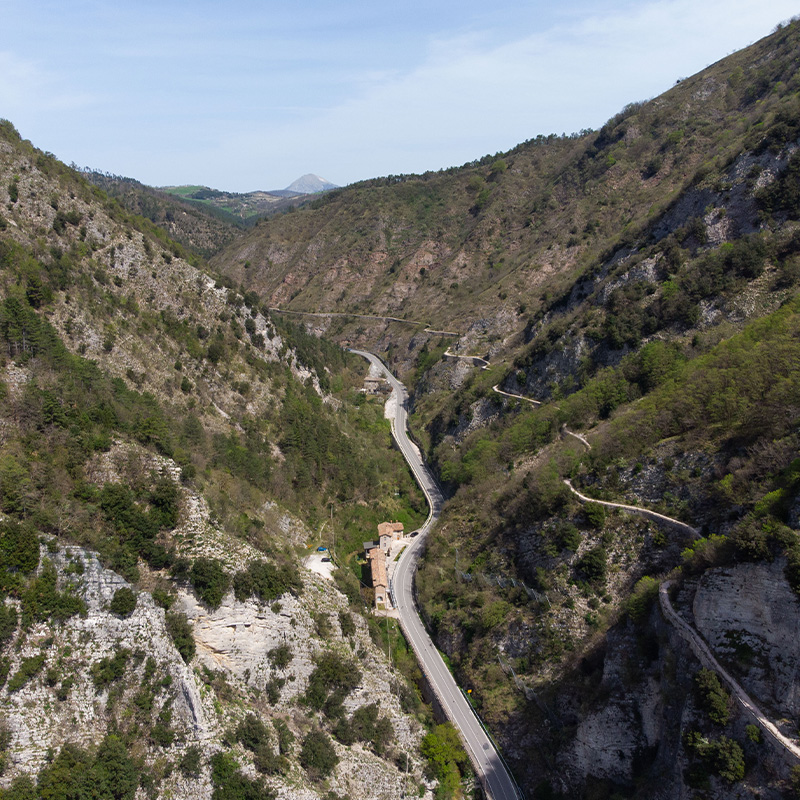
The memory of the Earth
Between Mount Foce and Mount Ingino, the Bottaccione Gorge is a stone book that tells 145 million years of history.
Amid rocky cliffs and the Camignano stream lies one of the most important geological sequences in the world—a silent witness to epochal events such as the extinction of the dinosaurs.
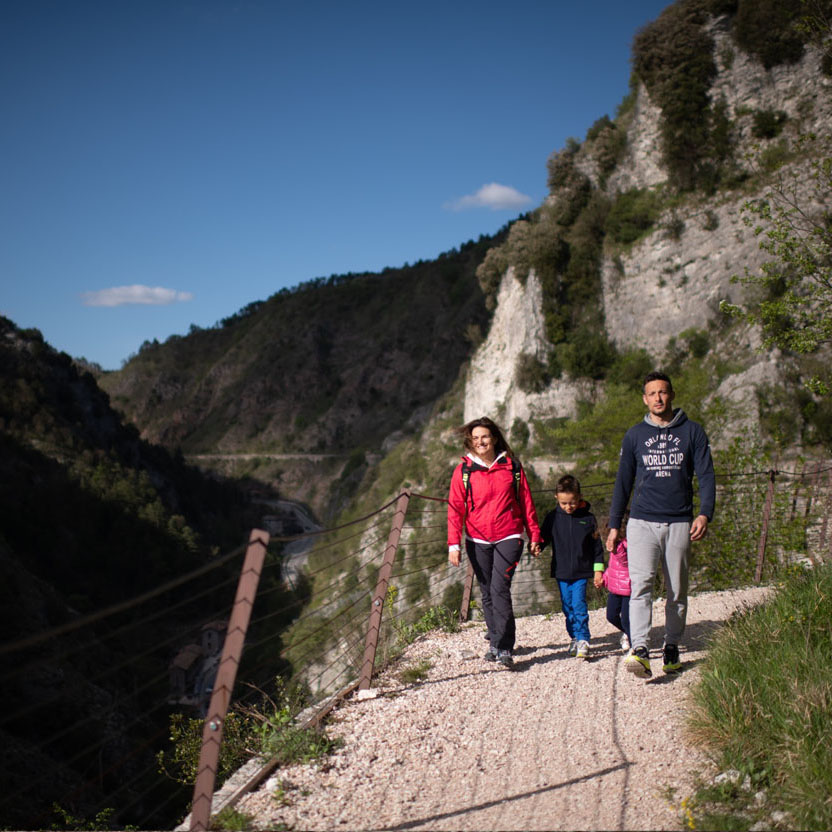
A walk through nature and breathtaking views
A route that blends nature and history, winding through scenic trails, breezy ridges, silent valleys, and untamed woods. Rocky walls and glimpses of the medieval past emerge along the way, silent witnesses to history.
From the heart of Gubbio, the path climbs to the ridge of Monte d’Ansciano, offering breathtaking views over the Eugubine plain. The descent leads to the Bottaccione Gorge—a geological treasure—before returning to town along the Medieval Aqueduct, which provides a stunning, elevated view over Gubbio.
The trail is accessible but demanding, with some slippery or uneven sections. The sun accompanies much of the walk, and rest stops are few. An intense and rewarding experience for those who want to discover Gubbio in an authentic and immersive way.
Services

IAT - informations - ilikegubbio.com

Parking

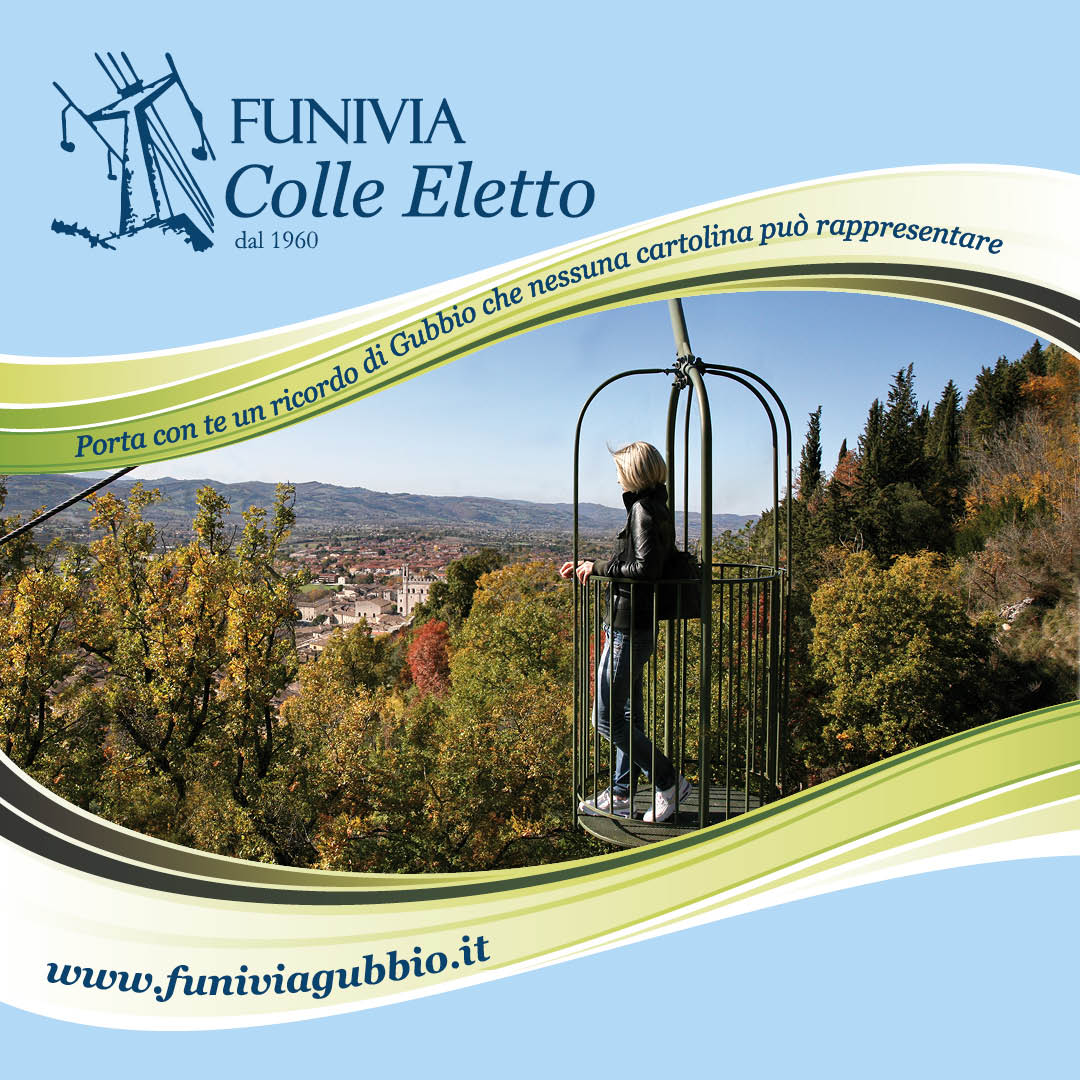
Cable car

Tourist train

Elevators

Pedestrian underpass

Viewpoint
PLUS
(not to be missed)
partner hello gubbio 2026

taste Gubbio
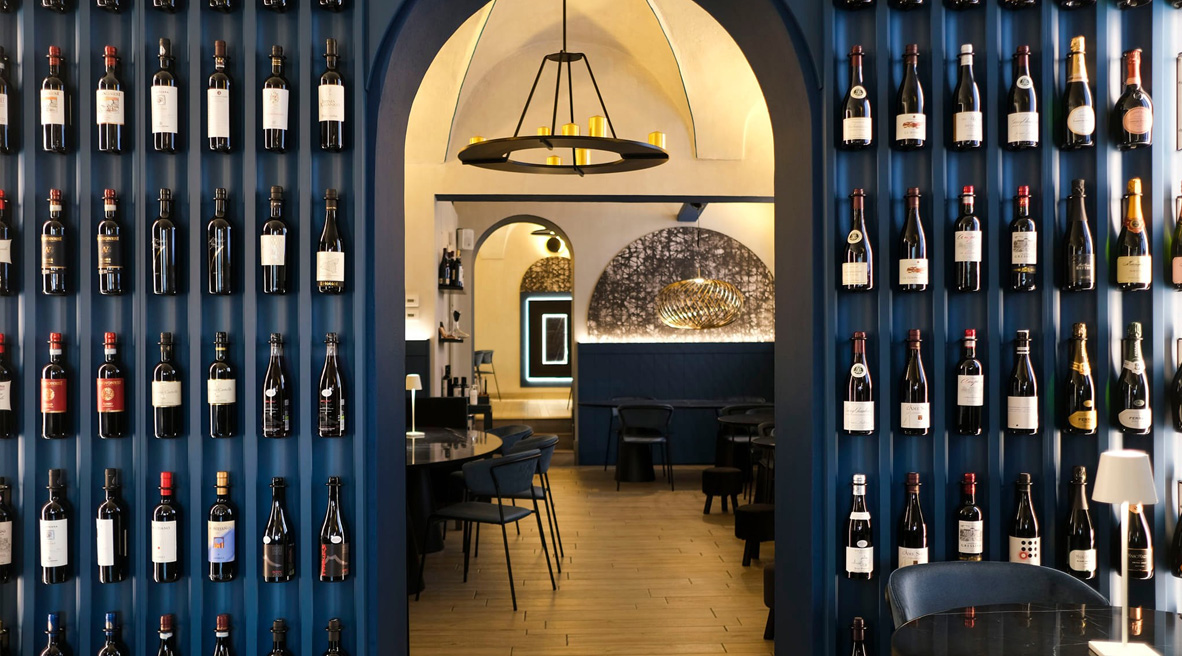
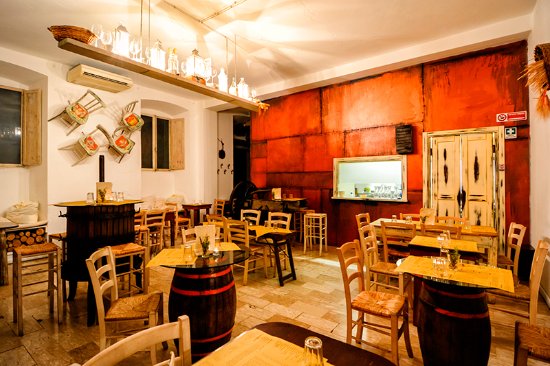
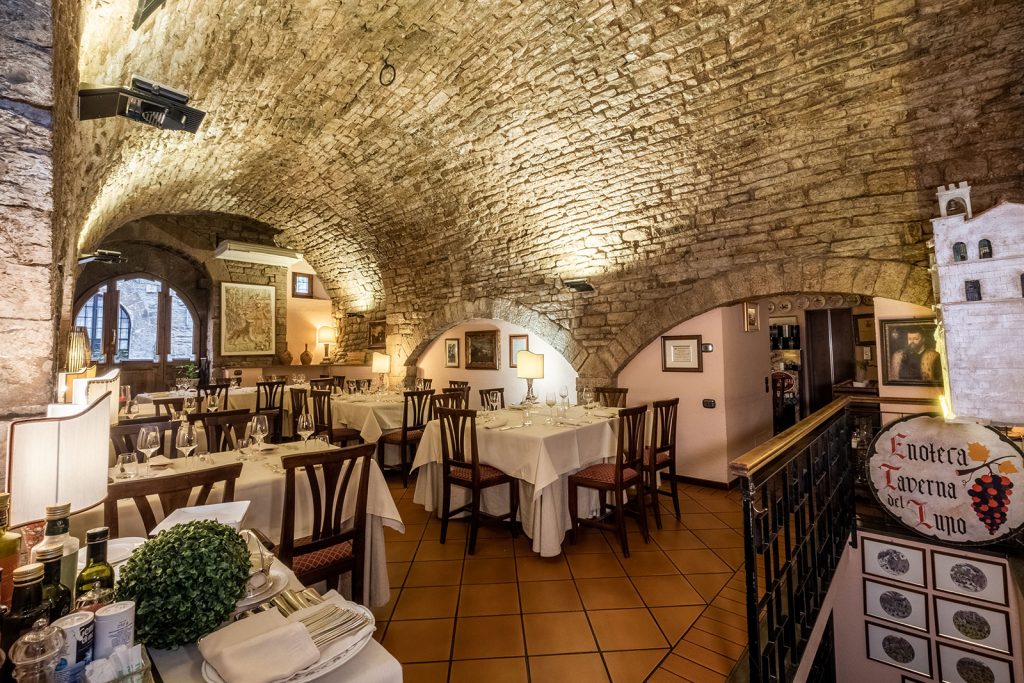
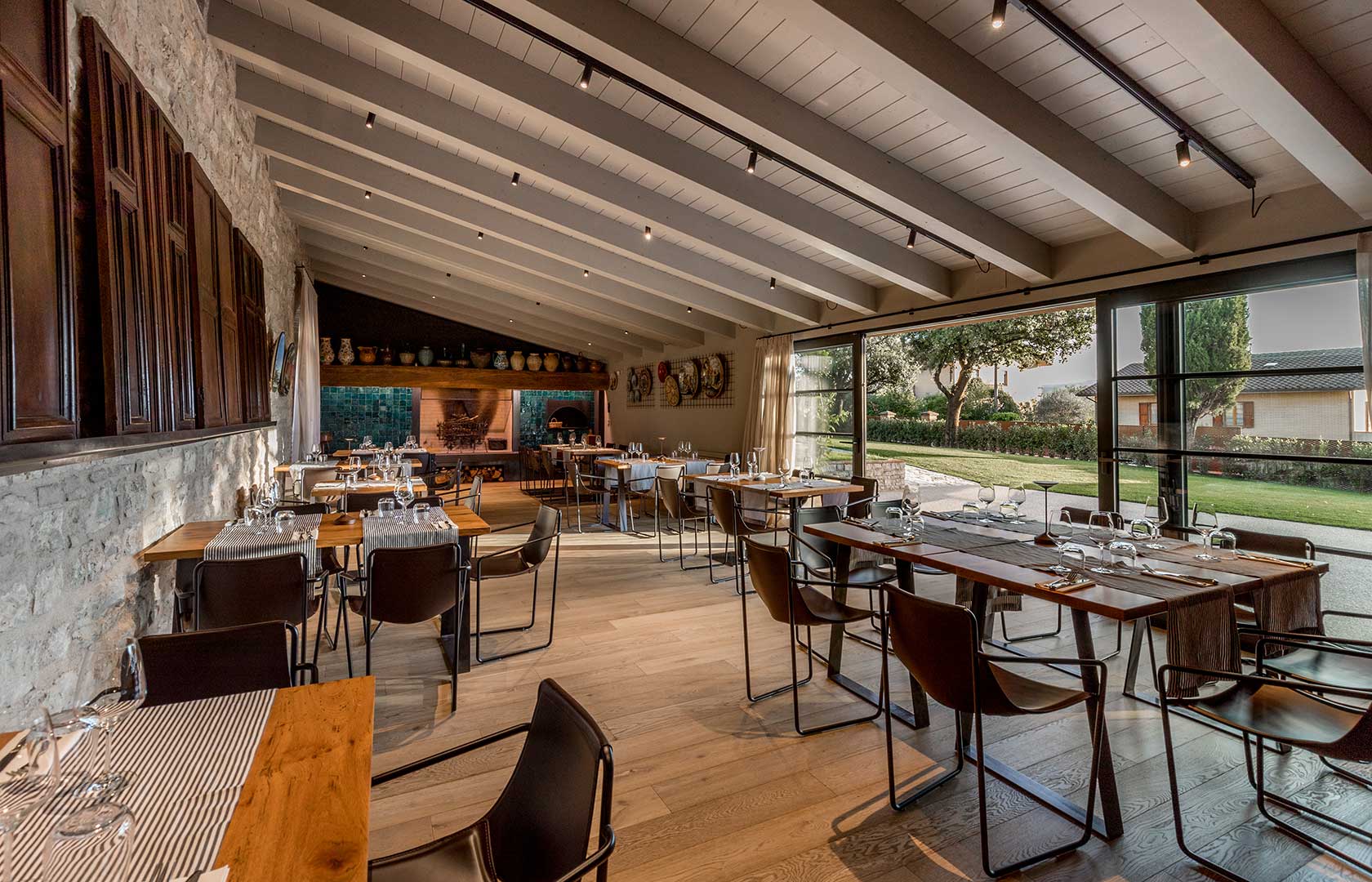
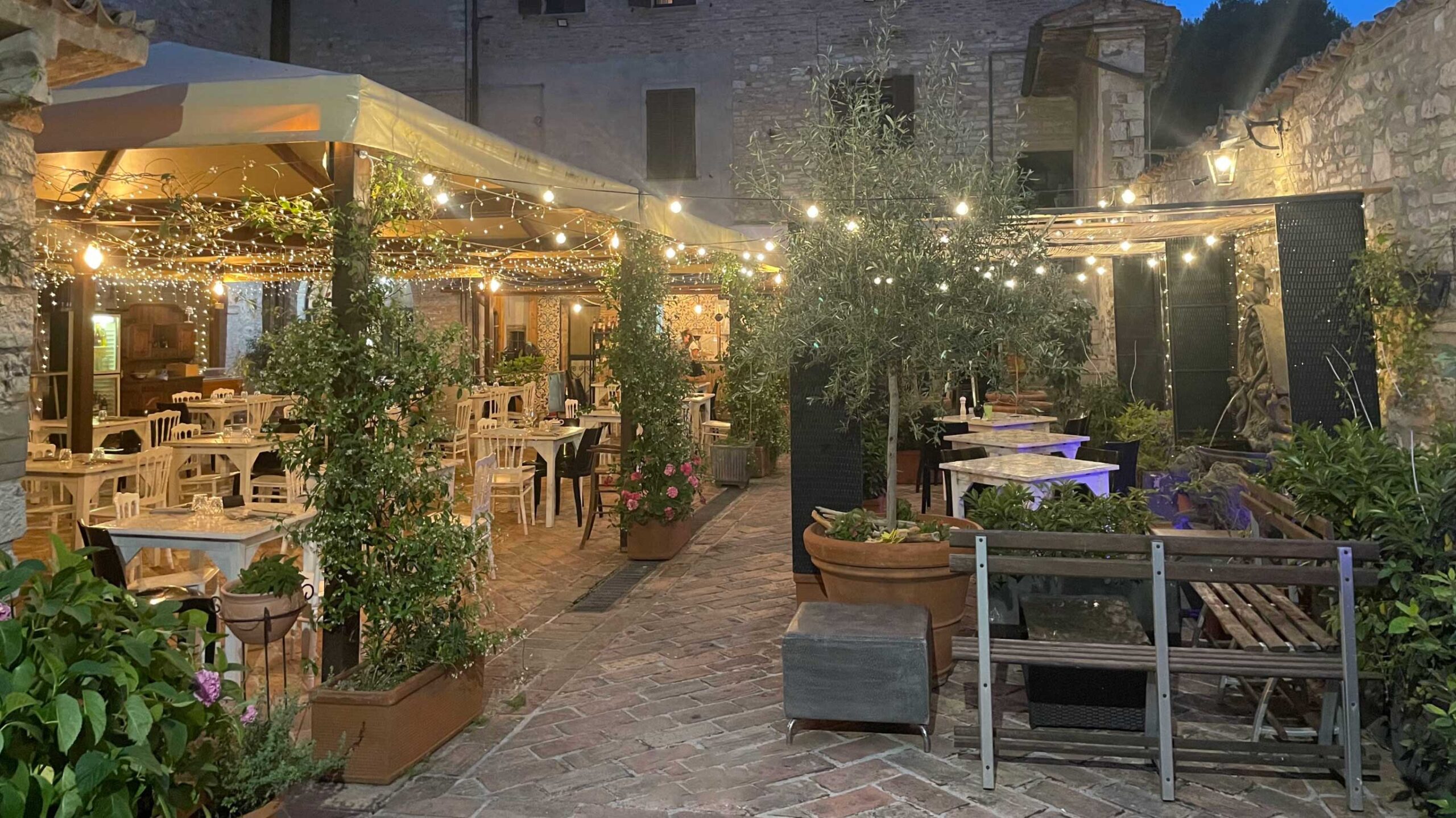
Gubbio is not only about history and breathtaking views — it’s also a journey of flavor through the authentic tastes of Umbrian tradition. From cozy taverns to traditional restaurants, from truffle-based dishes to local specialties like crescia and grilled meats, you’ll find the perfect spot to savor true Eugubine cuisine. Discover the best places to eat and let yourself be won over by the aromas and flavors of this unique land.



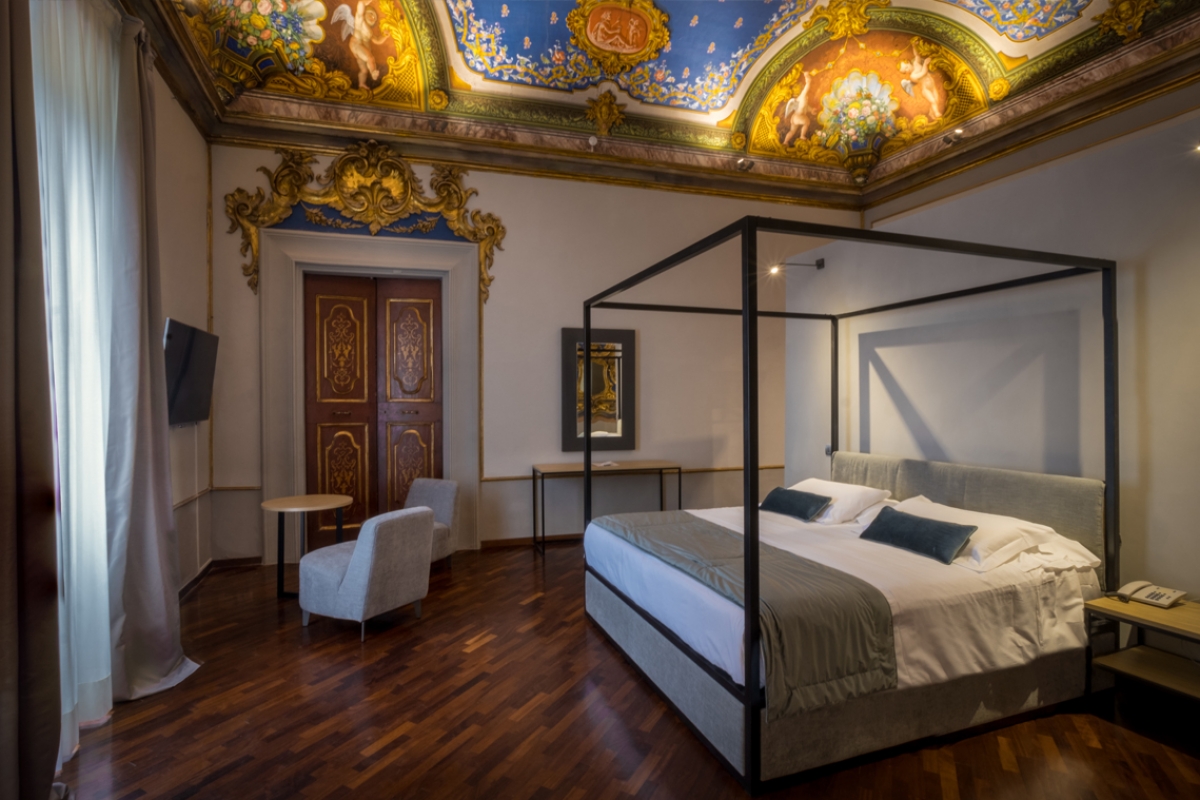
sleep in Gubbio
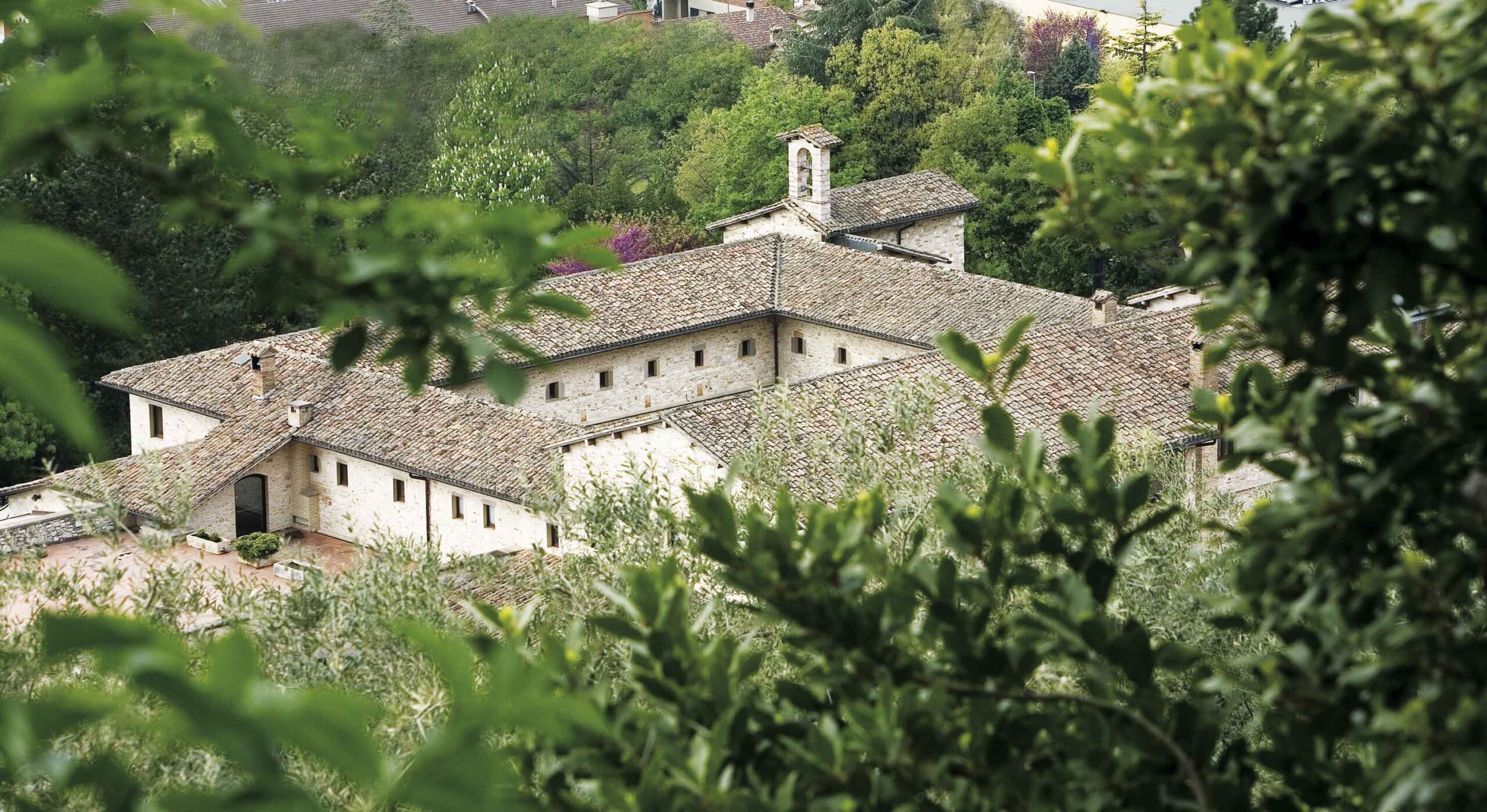
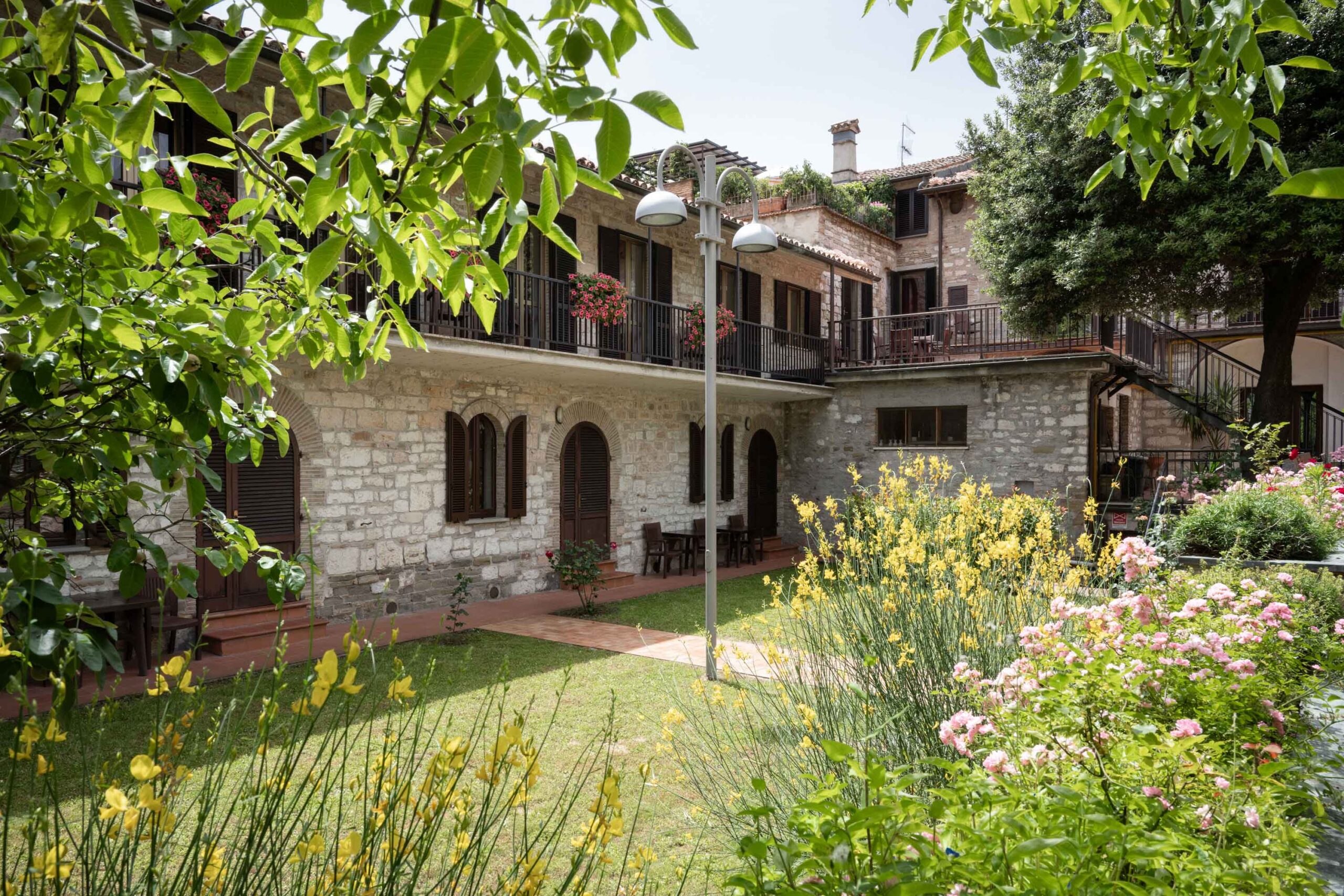
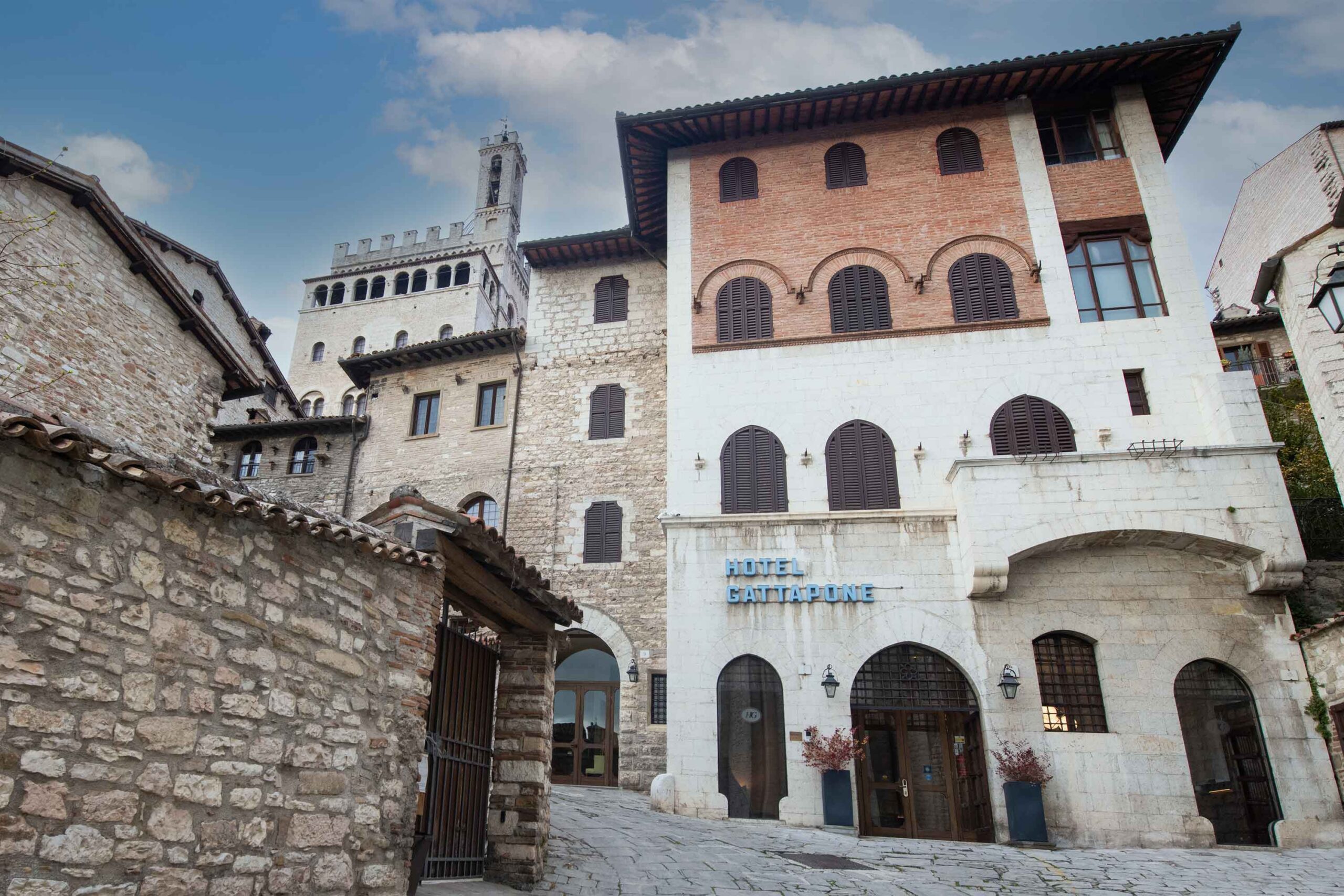
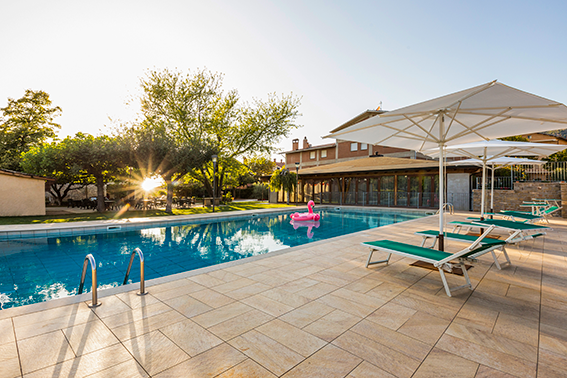
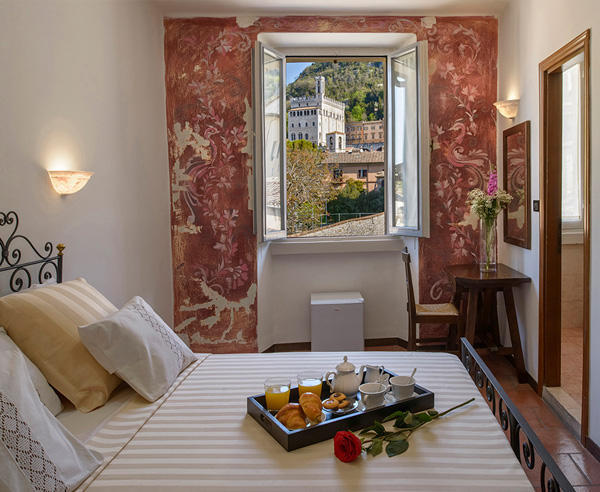
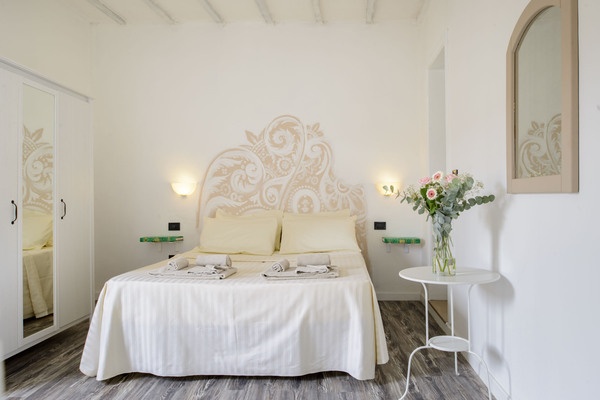
Whether you’re looking for a romantic getaway, a nature-filled escape, or the comfort of a central stay, Gubbio offers a wide range of accommodations to suit every need. Welcoming hotels, charming B&Bs, and scenic country homes are ready to host you and offer an authentic experience steeped in Umbrian relaxation and tradition. Discover the best places to stay and find the perfect spot for your visit.






experiences
Gubbio is a city to experience from every angle — a blend of culture, traditions, and services that make your stay even more special. From museums that tell its story, to mobility options that help you explore it with ease, and activities that immerse you in its authentic spirit, here you’ll find everything you need for an unforgettable journey.

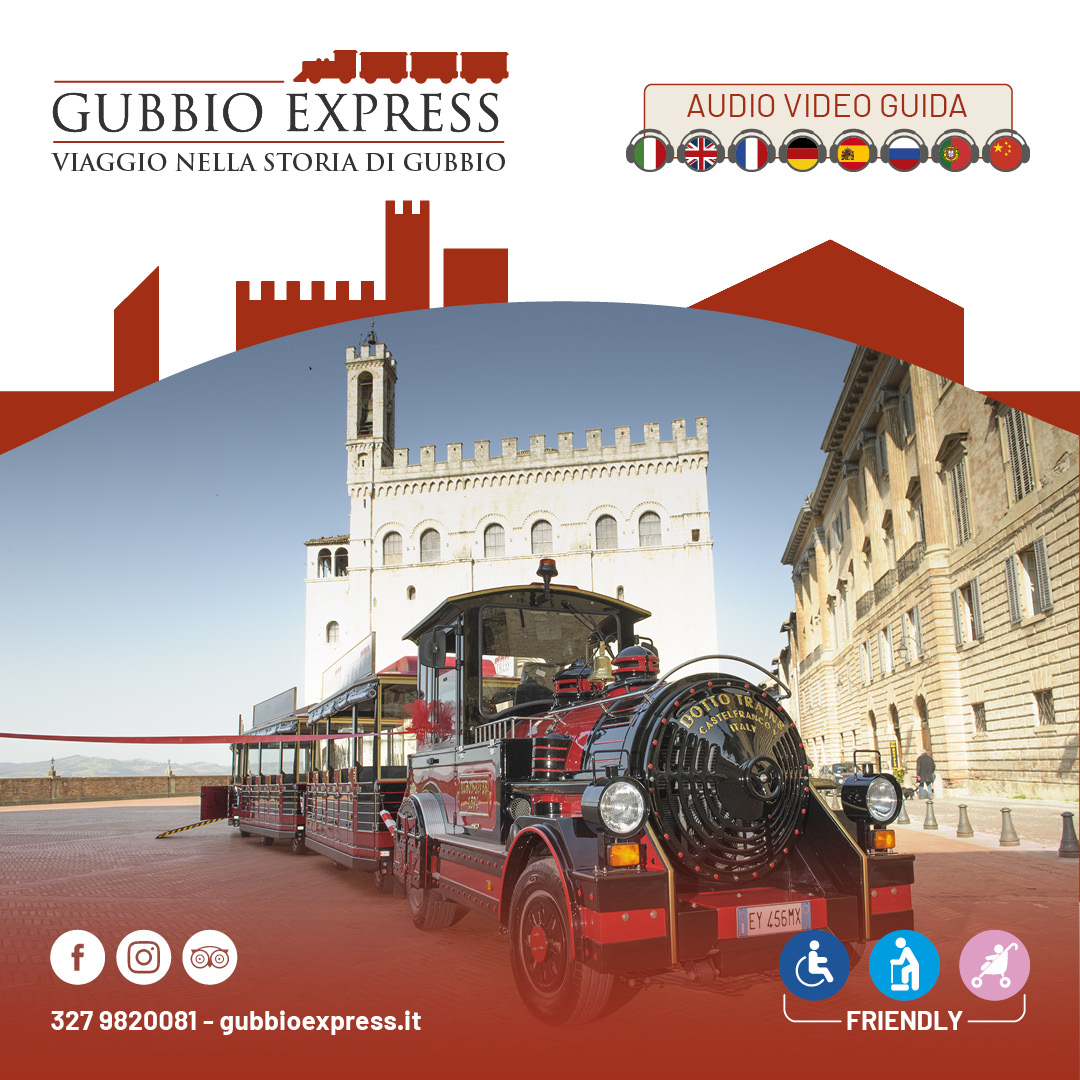
services
Discover who supports tourism in Gubbio! Thanks to the contribution of local businesses and services, our project helps showcase the beauty of the city. Click on the banners to meet the partners who make it all possible!


be a partner
Join hello Gubbio and showcase your business to visitors and tourists. Contact us to find out how to become a sponsor.